
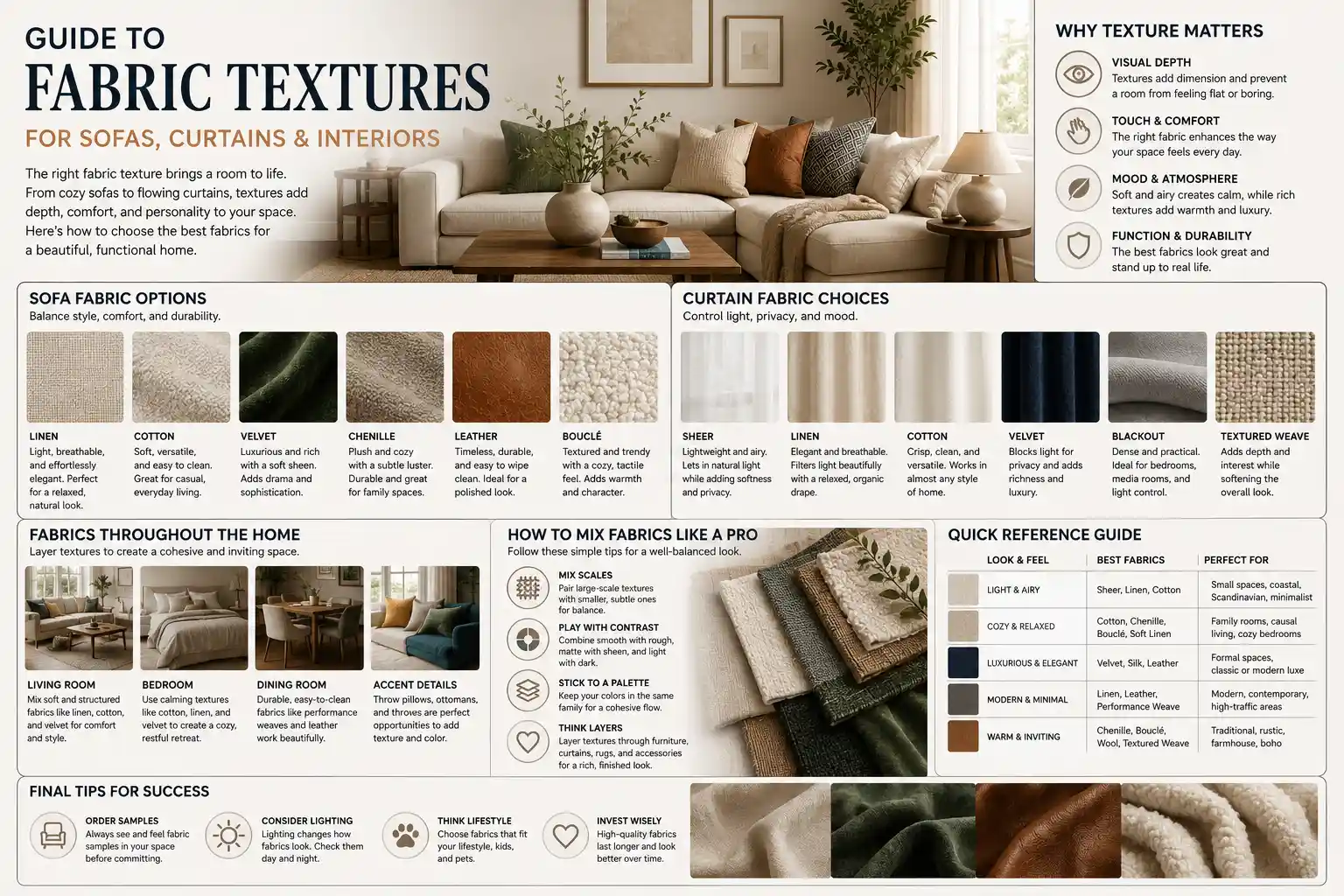
When you walk into a well-designed room, what’s the first thing that catches your eye? It’s rarely just the furniture shape or wall color—more often, it’s the subtle interplay of fabric textures that makes the space feel inviting, cohesive, and intentionally styled. Fabric textures for sofas, curtains, and interiors do more than add visual interest: they affect how a room feels, how it functions, and even how we experience it on an emotional level. A sleek leather sofa creates an entirely different mood than a chunky woven linen, just as flowing sheer curtains transform a space in a way heavy velvet never could. Whether you’re renovating your living room, updating a bedroom, or starting from scratch with a new home, understanding how to select and pair fabric textures is one of the most powerful tools you have to create an interior that works for your lifestyle and reflects your personal taste.
Common Fabric Textures: A Guide to Key Options
Before you start pairing textures or choosing materials for your sofa or curtains, it helps to understand the most popular fabric options available, their unique textures, and what makes them a good fit for different spaces. Each texture comes with its own benefits, drawbacks, and aesthetic, so matching the material to your needs is the first step to a successful design.
Sofa-Focused Fabric Textures
Sofas take the most wear and tear in any home, so texture and durability need to go hand in hand. Some of the most popular options for sofa upholstery include:
- Leather: Smooth, sleek, and subtly grainy, natural leather develops a rich patina over time that makes each piece unique. Full-grain leather has a pronounced, organic texture, while bonded or faux leather has a more uniform, even finish. It’s durable, easy to wipe clean, and works for everything from mid-century modern to traditional rustic spaces.
- Linen: Linen has a slightly nubby, matte texture with a relaxed, slubby weave that feels casual and breathable. It softens with use, but it wrinkles easily, making it a better fit for low-traffic living rooms than family spaces that see daily use.
- Chenille: Chenille is known for its soft, fuzzy, plush texture that feels almost velvety to the touch. It’s made from twisted yarns that create a slightly bumpy, cozy surface, and it’s durable enough for high-traffic family rooms. It tends to hold onto pet hair, however, so it may not be ideal for pet owners.
- Velvet: Velvet has a dense, plush pile that creates a subtle sheen as light hits it, giving it a luxe, depthful texture. It’s soft to sit on, and modern performance velvet versions are stain-resistant enough for everyday use. It adds instant glamour to any space.
- Woven cotton: Plain or twill woven cotton has a smooth but slightly textured, matte finish that works for almost any design style. It’s affordable, easy to clean, and versatile enough for casual and formal spaces alike.
Curtain-Focused Fabric Textures
Curtain texture plays a big role in how much light filters into a room, how the fabric drapes, and what mood it creates. Unlike sofas, curtains don’t experience the same heavy wear, so you can prioritize aesthetic over durability in most cases:
- Sheer: Sheer curtains have a fine, gauzy, lightweight texture that lets soft natural light filter through while still maintaining privacy. They drape in soft, flowing folds and work best in spaces that feel open and airy, like living rooms with large windows or sunrooms.
- Linen: Similar to linen upholstery, linen curtains have a slubby, matte texture that drapes in relaxed, casual folds. It filters light softly and works for everything from farmhouse to coastal contemporary design.
- Velvet: Heavy, dense velvet curtains have a thick plush texture that blocks out light (making them ideal for bedrooms) and adds a dramatic, luxe vibe to dining rooms or formal living rooms. The texture absorbs and reflects light to create subtle depth in a space.
- Boucle: Boucle is a nubby, looped weave that creates a textured, tactile surface. Boucle curtains are heavier than linen, add a cozy, modern feel, and work well in neutral minimalist or Scandinavian-inspired spaces.
- Silk: Silk has a smooth, subtle lustre that creates an elegant, refined texture. It drapes beautifully and adds a formal, luxurious touch to dining rooms or master bedrooms, though it tends to fade in direct sunlight, so it’s best used in low-light spaces or lined.
Accent Fabric Textures for Interiors
Texture doesn’t stop at sofas and curtains—accent pieces like throw pillows, blankets, rugs, and upholstered ottomans let you layer in extra texture to add depth to a room. Common accent textures include boucle, jute, wool, knitted cotton, and faux fur, each adding a different tactile element that complements larger pieces.
How Texture Impacts Room Mood and Perception
Texture isn’t just a tactile detail—it changes how we perceive the size, temperature, and mood of a room. Understanding this impact lets you use texture intentionally to fix common design problems, from making a small room feel larger to making a large cold space feel cozy.
First, texture affects perceived room size. Smooth, flat textures reflect more light, which makes a room feel brighter and more open. If you have a small living room, pairing a smooth leather sofa with lightweight linen curtains will keep the space from feeling cluttered or cramped. On the other hand, heavy, textured fabrics like velvet and chunky boucle absorb light, making large, open-concept rooms feel more intimate and grounded. A 20-foot wide living room will feel much more welcoming with a large plush velvet sectional and heavy textured curtains than it would with all smooth, sleek surfaces.
Texture also impacts how warm or cool a room feels. Tactile, bulky textures like chenille, wool, and boucle read as warm and cozy, even in a cool color palette. That’s why they’re so popular in winter cabins and northern climate homes: they make a space feel inviting on cold days. Smooth, matte textures like linen, cotton, and leather read as cooler and more breathable, making them ideal for warm climates or summer-focused design schemes. A linen sofa in a Florida beach home will feel far more comfortable than a thick chenille option, both visually and physically.
Texture is the secret ingredient that makes a neutral room feel interesting instead of boring. It’s what makes you want to walk in and sit down, instead of just look at the space from the doorway.
Texture also plays a key role in establishing a room’s overall design style. You can’t create a cozy Scandinavian living room with a smooth faux leather sofa and sleek silk curtains—Scandinavian design relies on natural, tactile textures like light boucle, linen, and jute to feel warm and inviting. Similarly, a modern minimalist space will feel off-balance if you fill it with chunky knitted throws and plush velvet everything; minimalist design thrives on clean, understated textures with just one or two tactile accents to add warmth.
Pairing Textures: Practical Rules for Cohesive Design
One of the most common questions homeowners have is how to mix multiple fabric textures without making the space feel cluttered or chaotic. The good news is that you don’t need a professional design degree to get it right—following a few simple rules will help you create a layered, cohesive space that feels intentional, not messy.
Stick to the 80/20 Rule for Smooth vs. Textured
A good starting point for any space is to follow the 80/20 rule: 80% of your large fabric pieces (sofa, curtains, area rug) should be relatively smooth or subtly textured, and 20% should be bolder, more tactile accent textures. This gives you enough visual interest without overwhelming the eye. For example, if you have a smooth leather sofa (smooth texture) and plain linen curtains (subtle texture), you can add 20% more texture with a chunky knit throw, a couple of boucle throw pillows, and a jute area rug. This keeps the space balanced, rather than filling it with multiple large, heavily textured pieces that compete for attention.
Contrast Texture Weight for Balance
Another key principle is to contrast the weight of different textures. If you have a heavy, thick, plush texture in one large piece, balance it with a lighter, smoother texture somewhere else. This prevents the space from feeling too heavy or too flat. For example:
- If you have a large chunky boucle sofa (heavy, highly textured), pair it with lightweight, smooth linen curtains to balance the bulk. Adding a smooth leather ottoman as a coffee table will further balance the texture.
- If you have a sleek, smooth leather sofa, add visual weight with a pair of heavy textured velvet curtains or a thick woven wool rug to keep the space from feeling too cold or sterile.
- If you have soft, nubby linen curtains, balance them with a plush velvet sofa to add depth and luxe texture that keeps the linen from looking too casual.
Build a Texture Palette Around a Core Piece
Instead of picking textures randomly, start with your largest fabric piece—usually the sofa—and build the rest of the room’s texture palette around it. This keeps everything cohesive. If your core piece is a plush velvet sofa, for example, you can pair it with:
- Smooth, matte linen curtains to contrast the velvet’s sheen and soft pile
- A smooth low-pile wool rug to ground the sofa without adding too much competing texture
- A nubby boucle throw pillow to add a contrasting tactile element
- A smooth leather accent chair to add a different type of smooth texture that complements the velvet
If your core piece is a smooth leather sofa, your texture palette might include heavy velvet curtains, a chunky jute rug, and soft chenille throw pillows to add warmth and contrast to the leather’s sleek surface.
Don’t Forget Natural Texture Variety
Even if you love neutral colors, mixing different natural fabric textures keeps the space from feeling one-note. A room with all cotton fabrics will feel flat, but a room with cotton, leather, linen, and wool will feel layered and interesting even if everything is the same shade of off-white. This is the core of modern neutral design: it’s not about matching colors, it’s about mixing textures to create depth.
Choosing Textures Based on Lifestyle and Durability Needs
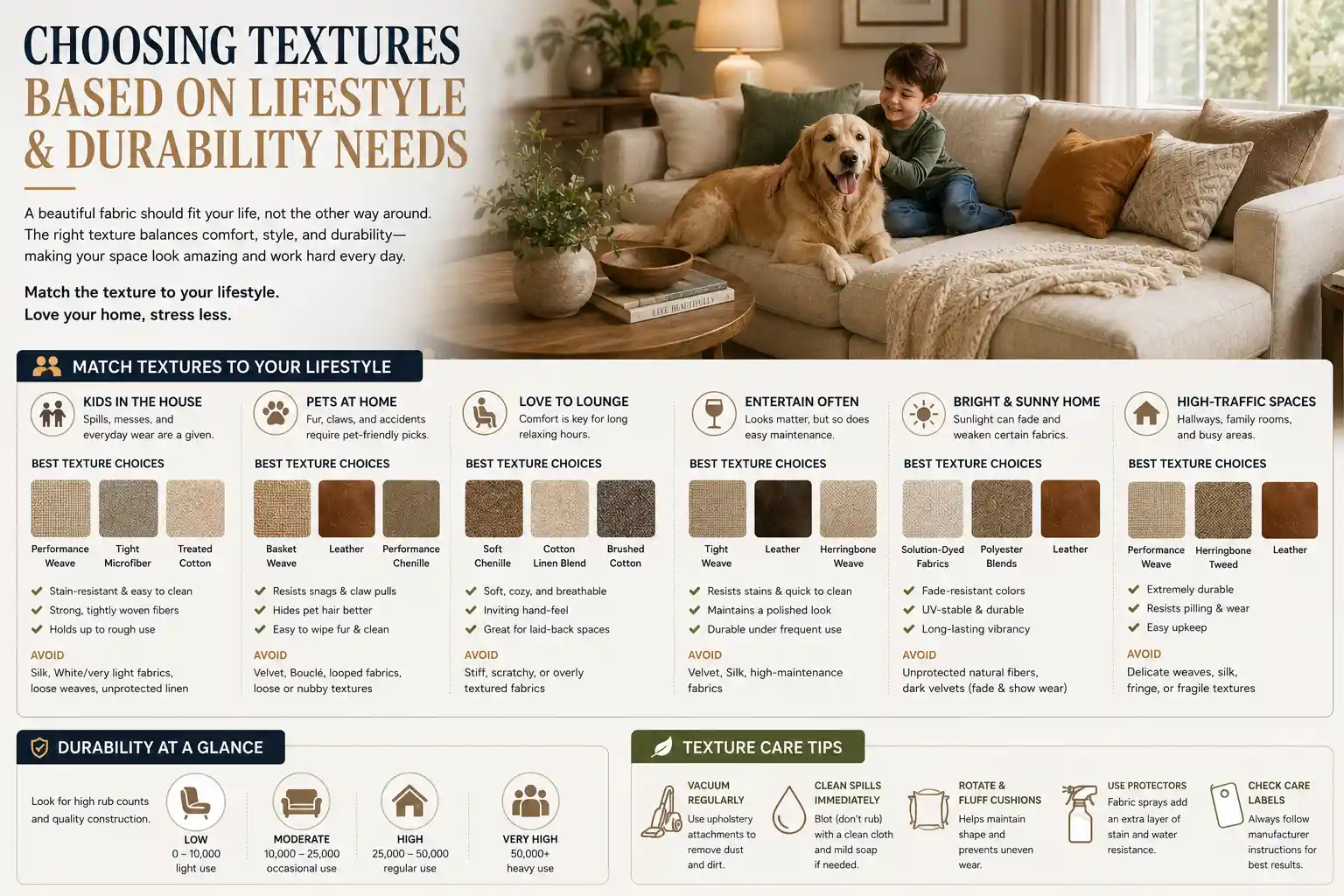
Aesthetics are important, but texture has to work with your lifestyle, too. A beautiful plush chenille sofa might look perfect in the showroom, but if you have two young kids and a shedding golden retriever, it will turn into a high-maintenance nightmare within a few months. Here’s how to match texture to your daily use:
For High-Traffic Family Spaces
If your sofa is used daily for movie nights, snack time, and pet naps, prioritize durable, easy-to-clean textures that can stand up to wear. The best options for sofas in high-traffic spaces include:
- Full-grain or top-grain leather: It’s easy to wipe clean, resists stains, and gets better with age instead of looking worn. Pet hair can be brushed off easily.
- Performance polyester blends: Modern performance fabrics have a wide range of textures, from smooth cotton-like weaves to soft performance velvet. They’re treated to resist stains and fading, and most can be spot-cleaned or even machine-washed if you have removable cushion covers.
- Textured canvas: Heavy woven canvas has a subtle rugged texture and is extremely durable, easy to clean, and resistant to pilling.
For curtains in high-traffic family spaces, machine-washable cotton or linen blends are the best choice. They hold up well to regular cleaning, and their casual texture fits perfectly into family-focused spaces.
For Low-Traffic Formal Spaces
If you’re designing a formal living room, dining room, or guest bedroom that doesn’t see daily use, you can prioritize texture and aesthetic over durability. Luxurious textures like silk, natural linen, and real velvet work beautifully here, since they won’t be subjected to constant wear and tear. For formal dining rooms, heavy silk or velvet curtains add a dramatic, elegant texture that elevates the entire space, while a linen-upholstered dining bench adds a relaxed refined texture that works for traditional and contemporary spaces alike.
For Pet Owners
Pet owners need to pay extra attention to how texture interacts with pet hair and claws. Some textures are far more pet-friendly than others:
- Best textures: Smooth leather, tight-woven performance canvas, and microfiber. Pet hair brushes off leather and microfiber easily, and tight weaves don’t snag claws.
- Worst textures: Chenille, boucle, and loose-weave linen. These textures have open loops or nubby fibers that catch pet hair, and claws can easily snag the loops, causing pulls that ruin the fabric.
If you love the look of boucle but have pets, look for a modern performance boucle with a tighter weave that resists snags and makes hair easier to remove. It won’t be completely maintenance-free, but it will hold up far better than a traditional loose-weave boucle.
For Climate Considerations
Your local climate should also influence your texture choices. If you live in a warm, humid climate, choose breathable, lightweight textures that don’t trap heat: linen, cotton, and leather are all great choices. Thick plush textures like velvet and chenille will feel heavy and hot in the summer, even if you have air conditioning. If you live in a cold climate, you can lean into heavier, warmer textures that make the space feel cozy: velvet, chenille, boucle, and wool all work beautifully to add warmth to a cold space.
Common Texture Mistakes to Avoid
Even experienced designers can make missteps when working with fabric textures. Avoid these common mistakes to get the most out of your design choices:
The first mistake is matching all textures instead of mixing them. Many homeowners default to buying all matching fabrics for their sofa, curtains, and accent pieces, which creates a flat, boring space that lacks depth. If your sofa is linen, there’s no reason your curtains have to be the exact same linen—mixing textures creates far more interest. The only exception is if you’re intentionally going for a monochromatic, seamless look, which works in small spaces but feels flat in most larger rooms.
The second mistake is overloading on too many bold textures at once. If you have a boucle sofa, velvet curtains, a shag rug, and chunky knitted throw, all those textures compete for attention and make the space feel cluttered and overwhelming. Sticking to the 80/20 rule we covered earlier prevents this, by keeping most of your large pieces smooth or subtly textured and saving bold textures for small accents.
The third common mistake is ignoring durability for the sake of aesthetic. It’s easy to fall in love with the look of a pure linen sofa in a showroom, but if you use your sofa daily, pure linen will wrinkle, stain easily, and wear out much faster than a performance blend. There are now performance fabric alternatives for almost every popular texture, from linen to velvet to boucle, so you don’t have to sacrifice looks for function. Performance linen has the same slubby, relaxed texture as pure linen but is treated to resist staining and wrinkling, making it perfect for everyday use.
The fourth mistake is forgetting to test texture in person. Photos online can only show you so much—you need to feel a fabric to understand its texture and how it will look in your space’s lighting. Most furniture stores and fabric retailers will send you free or low-cost swatches, so you can bring them home, see how they look next to your existing furniture and in your room’s natural and artificial light, and feel the texture to make sure it’s what you want. A velvet that looks rich and deep in a showroom photo might look cheap and shiny in your living room’s natural light, so testing swatches is always worth the extra time.
Conclusion
Fabric textures are the foundation of a well-designed, inviting interior, adding depth, mood, and functionality that solid colors and matching furniture can never achieve. By understanding the unique qualities of different textures for sofas, curtains, and accent pieces, you can select options that fit your lifestyle, contrast and layer textures to create a cohesive balanced space, and avoid common mistakes that leave your room feeling flat or high-maintenance. Whether you prefer a sleek modern aesthetic with smooth leather and subtle linen textures or a cozy bohemian space filled with chunky boucle, soft velvet, and natural woven accents, the right mix of textures will turn a generic room into a space that feels uniquely yours, inviting you to sit, relax, and enjoy every moment.