
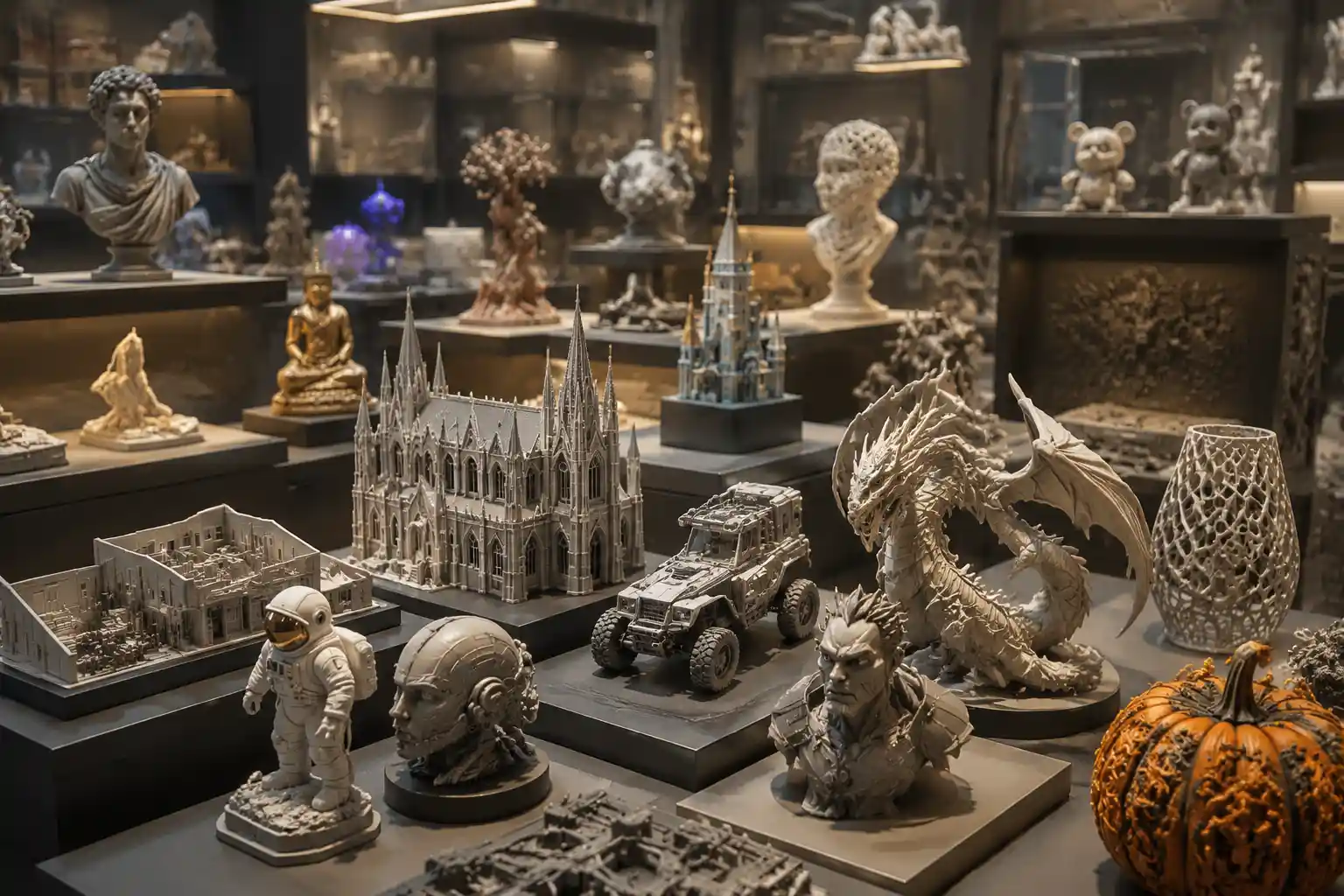
Three decades ago, creating a 3D model required a team of specialized artists, expensive proprietary software, and months of tedious manual work. Today, a single independent creator can design a hyper-realistic character, a detailed architectural prototype, or a complex mechanical part in days, and sell it instantly to buyers across the globe. Paid 3D model marketplaces have turned this once niche craft into a accessible global economy, serving everyone from indie game developers and Hollywood VFX studios to product designers and 3D printing enthusiasts. Whether you’re a creator looking to monetize your skills or a buyer searching for a ready-made asset to cut down project time, understanding how these platforms work, their pros and cons, and how to succeed on them is key to getting the most out of this booming industry.
What Are Paid 3D Model Marketplaces, and Who Uses Them?
At their core, paid 3D model marketplaces are curated e-commerce platforms that connect 3D artists and model creators with buyers looking for ready-to-use 3D assets. Unlike free file-sharing sites that often host unlicensed, low-quality, or pirated content, paid marketplaces vet submissions, handle payment processing, enforce licensing terms, and provide a structured way for creators to earn revenue from their work. Most platforms take a percentage cut of each sale (typically between 30% and 50%) in exchange for hosting, marketing, and customer support.
The user base for these platforms is incredibly diverse, spanning nearly every industry that uses 3D design. Let’s break down the most common groups of buyers and sellers:
Key Buyer Categories- Indie and AAA Game Developers: Game studios of all sizes rely on pre-made 3D assets for environments, characters, props, and animations to cut down development time. An indie studio working on a mobile horror game, for example, can buy hundreds of ready-made furniture, foliage, and background assets for a fraction of the cost of hiring a full team to create them from scratch.
- Architectural Visualization (ArchViz) Professionals: Architects and real estate developers use high-quality 3D models of furniture, landscaping, and building fixtures to create realistic renderings of proposed projects. Instead of modeling every couch and tree themselves, ArchViz artists purchase pre-made assets to speed up client presentations.
- Product Designers and Manufacturers: Designers creating consumer goods, industrial parts, or custom products often source 3D models for testing or to use as a base for custom modifications. Many models are designed to be 3D printable, making them popular with small batch manufacturers and hobbyists.
- VFX and Animation Studios: Film, television, and commercial production studios use stock 3D assets for everything from background crowd characters to complex props that only appear on screen for a few seconds. This saves millions of dollars in production costs for big-budget projects.
- Hobbyists and Educators: 3D printing enthusiasts, cosplayers, and students learning 3D design regularly purchase custom models for personal projects or educational use.
On the creator side, sellers range from full-time professional artists who earn their entire income through marketplace sales to part-time hobbyists who sell models as a side income. Many full-time studios also sell excess assets they created for past projects as an additional revenue stream, turning work that would otherwise be archived into passive income. For new creators, marketplaces remove the need to build and market their own e-commerce site, letting them focus on design while the platform handles traffic and payments.
Top Types of Paid 3D Model Marketplaces: General vs. Niche
Not all paid 3D model marketplaces are the same. They generally fall into two broad categories: general marketplaces that host every type of 3D asset imaginable, and niche marketplaces that focus on specific use cases or industries. Each has its own advantages and disadvantages for both buyers and sellers.
Generalist Paid 3D MarketplacesGeneralist platforms are the largest and most popular options, with hundreds of thousands of assets across every category. The biggest names in this space include TurboSquid, CGTrader, Sketchfab, and Creative Market. These platforms benefit from massive existing traffic, so buyers can almost always find what they’re looking for, and sellers have access to a large built-in audience of potential customers.
Generalist platforms typically offer multiple licensing options, from personal use to commercial use for large projects, with price points ranging from a few dollars for a simple prop to hundreds of dollars for a high-poly, rigged character model. For new sellers, generalist platforms are a good starting point because their large audience makes it easier to make your first sales without doing your own marketing.
Niche Paid 3D Marketplaces“The biggest advantage of a large general marketplace is that they do the marketing for you. If you list a well-made model on TurboSquid or Sketchfab, people looking for that asset will find it — you don’t need a million followers on social media to start making sales.”
As the 3D industry has grown, niche marketplaces have emerged to serve specific use cases that general platforms don’t prioritize. These platforms typically have less competition, higher buyer intent, and often cater to industries willing to pay premium prices for specialized assets. Some of the most popular niche categories include:
- 3D Printable Models: Platforms like CGTrader (which has a dedicated 3D printing section), MyMiniFactory, and Gambody focus exclusively on models tested for 3D printing. Buyers on these platforms are often hobbyists and small manufacturers willing to pay for tested, error-free models that will print correctly on the first try.
- Game Development Assets: Marketplaces like Unity Asset Store and Unreal Engine Marketplace are built directly into the leading game development engines, making it easy for developers to buy and import assets directly into their projects. These platforms have extremely high buyer intent, as developers are already working in the engine and actively looking for assets to use.
- ArchViz Assets: Niche platforms like 3DArchDaily and Modelur specialize in high-quality architectural assets, from furniture and fixtures to entire building facades. These assets are optimized for realistic rendering, and many are created to match real-world product lines from popular furniture brands.
- VR/AR and Metaverse Assets: Newer niche platforms like Ready Player Me and Spatial focus on 3D assets for virtual and augmented reality applications, including avatars, virtual event spaces, and digital merchandise. This is one of the fastest growing niche segments as demand for interactive 3D content grows.
For sellers, niche marketplaces often mean less competition and higher average sale prices, because you’re targeting a specific audience with specific needs. For example, a seller who creates tested 3D printable cosplay helmets can charge more on a 3D printing niche platform than on a general marketplace, because buyers know the model is ready to print. For buyers, niche platforms make it easier to find assets that meet specific industry standards, instead of sifting through hundreds of unrelated assets on a general site.
Pros and Cons for Buyers and Sellers
Paid 3D model marketplaces offer huge benefits for both sides of the transaction, but they’re not without drawbacks. Understanding these can help you decide whether using a marketplace is the right choice for your project or business.
Advantages for Buyers- Massive time and cost savings: Creating a single high-quality 3D model can take anywhere from 10 to 100+ hours of work for an experienced artist. Buying a pre-made model costs a fraction of that, and lets you start using the asset in your project within minutes.
- Vetting and quality control: Reputable paid marketplaces vet all submissions before they go live, so you don’t have to worry about corrupted files, missing textures, or low-quality work that’s common on free file-sharing sites.
- Clear licensing terms: All paid models come with clear licensing that outlines what you can and can’t use the model for, from personal projects to commercial redistribution. This protects you from copyright claims that are common with unlicensed free assets.
- Multiple format options: Most creators offer models in multiple file formats (OBJ, FBX, STL, etc.) compatible with all major 3D software, so you don’t have to spend time converting files to work with your workflow.
The biggest disadvantage for buyers is that pre-made models may not fit your exact needs. A 3D character model you buy may have the wrong proportions or style for your game, or an architectural model may not match the exact dimensions you need for your rendering. This means you may still need to spend time modifying the model to fit your project, and in some cases, you may end up wasting money on a model that can’t be modified to work. Another common issue is inconsistent quality: even with vetting, some models may have hidden errors like non-manifold geometry (for 3D printing) or poorly optimized topology that causes performance issues in games or renderings. Finally, licensing can be confusing, especially if you’re using the asset for a commercial product with a large budget, so it’s important to read the fine print carefully before purchasing.
Advantages for Sellers- Passive income potential: Once you create a model and upload it to a marketplace, it can generate sales for years with no additional work. Many full-time sellers have portfolios of hundreds of models that generate consistent monthly income without ongoing effort.
- Low barrier to entry: You don’t need a business degree, a website, or a large marketing budget to start selling. All you need is 3D design skills and a good model to upload. The marketplace handles payment processing, customer service, and marketing.
- Access to a global audience: The largest marketplaces have millions of active buyers from every country in the world, so you can reach customers you would never be able to find on your own.
- Flexibility: You can sell as a part-time side hustle or scale it into a full-time business, depending on your goals and how much time you want to invest.
The biggest downside for sellers is the revenue cut that platforms take. Most major platforms take 30% to 50% of every sale, which adds up over time. For example, if you sell a $100 model, you may only take home $50 to $70 after the platform’s cut. There’s also a lot of competition on large general marketplaces, so new creators may struggle to get their models seen among hundreds of thousands of existing assets. Many sellers find that they have to market their models themselves on social media or design forums to drive traffic, which takes time away from creating new assets. Finally, platforms can change their terms of service, algorithm, or fee structure at any time, which can drastically impact your sales. Many sellers have seen their income drop overnight after a platform changed how search results are ranked or increased their fees.
Best Practices for Success on Paid 3D Model Marketplaces
Whether you’re a buyer looking to get the best value for your money or a seller looking to maximize your sales, following these best practices will help you get better results from paid 3D model marketplaces.
Best Practices for BuyersFirst, always double-check the licensing terms before you buy. Different licenses have different rules: a personal use license may let you use the model for 3D printing a cosplay prop for yourself, but not for selling mass-produced versions or using it in a commercial game. An extended commercial license is usually required for projects that will be distributed to more than a certain number of people, so make sure you pick the license that matches your use case to avoid legal issues later.
Second, review the model details and preview files carefully before purchasing. Most reputable marketplaces let you preview the model in 3D directly on the site, so you can check for geometry issues, see the texture quality, and confirm it matches the dimensions and style you need. Check what file formats are included, whether the model is rigged (for animated characters), whether textures are included, and if it’s been tested for 3D printing if that’s what you need. Many sellers also include wireframe previews that let you check the topology of the model, which is important for performance in games or animations.
Finally, if you’re buying multiple assets for a large project, check if the marketplace offers bulk discounts or subscription plans. Many platforms offer subscription services that let you download a certain number of assets per month for a flat fee, which can save you a lot of money if you buy assets regularly.
Best Practices for SellersIf you’re a creator looking to build a successful business on paid 3D model marketplaces, the first rule is to focus on high-demand niches instead of creating what you think is cool. While it’s okay to create models you enjoy, focusing on niches with consistent buyer demand will help you make sales faster. For example, there’s consistent high demand for low-poly game assets, 3D printable functional parts, ArchViz furniture, and cartoon character bases. Research what’s already selling well on the platform you’re using, and look for gaps where you can create higher quality assets than what’s already available.
Second, invest time in high-quality product photos and descriptions. Your preview images and 3D previews are the first thing buyers see, so blurry, low-quality previews will make buyers assume your model is low-quality even if it’s not. Include multiple angles, wireframe previews, close-ups of texture detail, and examples of the model in use (like a render of the couch in a living room, instead of just a photo of the couch on a white background). Write clear, detailed descriptions that include key information buyers look for: polygon count, file formats included, whether it’s rigged, whether it’s 3D print tested, and what software it’s compatible with. Use relevant keywords in your title and description to help buyers find your model in search — for example, “low poly medieval cottage game asset” is better than just “cottage” because it includes the keywords buyers will actually search for.
Third, price your models appropriately. Don’t underprice your work: high-quality models take time to create, and buyers are willing to pay more for models that work correctly and meet their needs. That said, research what similar models are priced at on your platform to make sure you’re not pricing yourself out of the market. Simple props can be priced lower to drive volume, while complex, high-poly rigged characters can be priced at a premium.
Fourth, drive external traffic to your listings. While marketplaces do bring traffic, most successful sellers supplement that with their own marketing. Post work-in-progress shots and finished models on Instagram, ArtStation, TikTok, and YouTube to build an audience and drive people to your marketplace store. Participate in 3D design forums and Discord communities to share your work and get your name in front of potential buyers. Building your own audience also protects you if the platform changes its algorithm or fees — you’ll still have a customer base you can reach directly.
Finally, provide good customer service. Respond to buyer questions quickly, and fix any issues that come up. Buyers who have a good experience with you are more likely to buy more of your models in the future and leave positive reviews, which helps improve your ranking in the marketplace’s search algorithm.
Conclusion
Paid 3D model marketplaces have transformed the 3D design industry, creating new opportunities for creators to earn income from their work and making 3D assets more accessible and affordable for buyers of all sizes. For creators, they offer a low-risk way to start a side hustle or build a full-time business selling 3D assets, with the platform handling the logistics of e-commerce and marketing. For buyers, they cut down project timelines and costs dramatically, while providing clear licensing and quality assurance that free file-sharing sites can’t match.
Like any platform, they have their tradeoffs: sellers give up a portion of their revenue and rely on the platform’s audience and policies, while buyers have to do their due diligence to find assets that fit their specific needs. But by choosing the right platform for your goals, following best practices for listing or purchasing assets, and focusing on quality, both buyers and sellers can get significant value from paid 3D model marketplaces. As demand for 3D content continues to grow for games, VFX, 3D printing, and the metaverse, these platforms are only going to become more important to the global 3D economy in the coming years.