
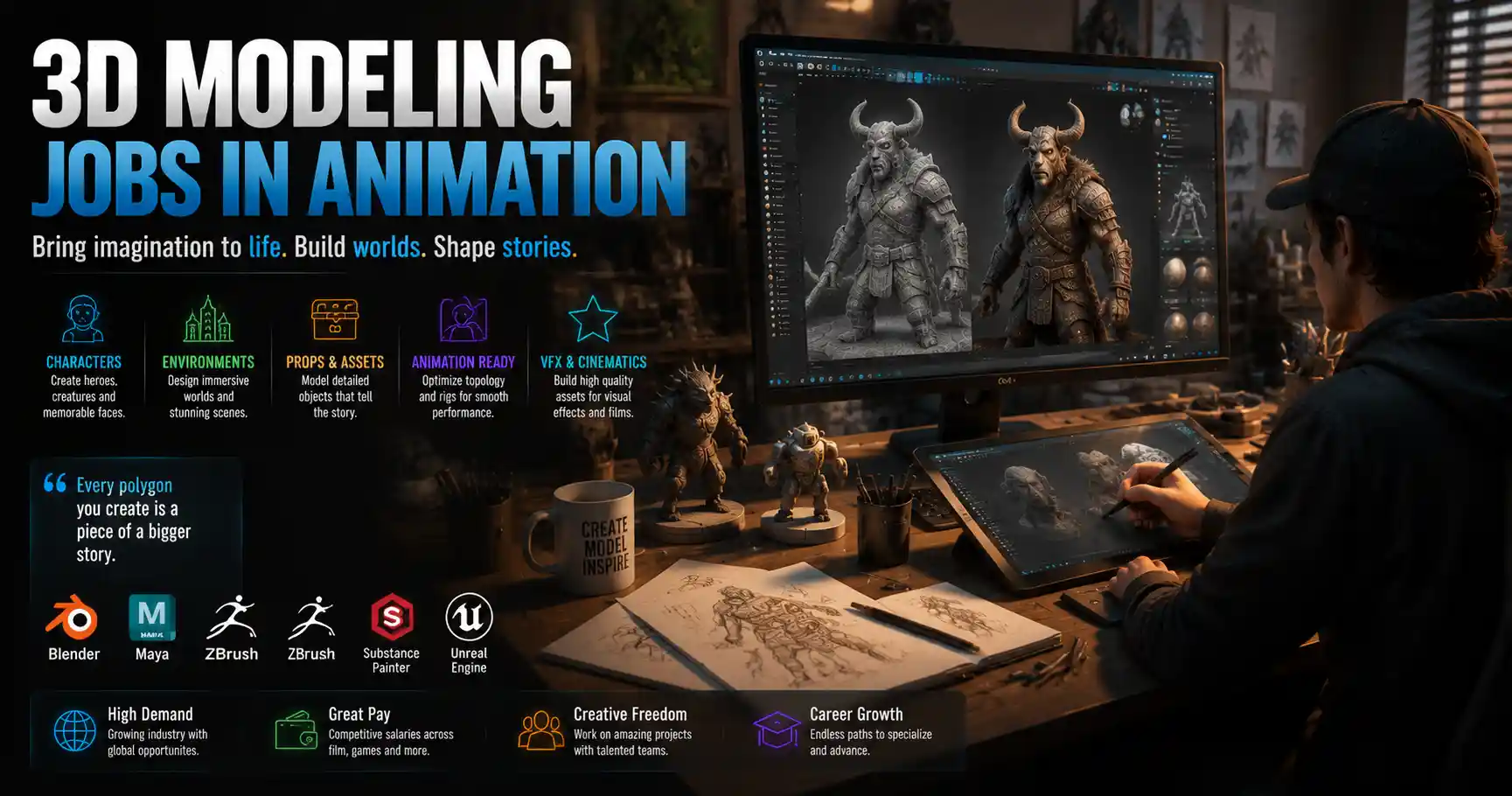
From the sweeping landscapes of Avatar: The Way of Water to the whimsical character designs of Pixar’s Elemental and the immersive worlds of blockbuster video games like The Legend of Zelda: Tears of the Kingdom, 3D modeling is the invisible backbone of modern entertainment and design. As audiences demand more detailed, lifelike, and creative visual content, the demand for skilled 3D modelers in the animation industry has skyrocketed. Whether you’re an aspiring artist considering a career shift, a student exploring creative majors, or a professional looking to transition into animation, understanding the landscape of 3D modeling jobs in this fast-growing field is the first step to building a sustainable, rewarding career.
What Does a 3D Modeler Do in the Animation Industry?
At its core, 3D modeling for animation involves creating three-dimensional representations of characters, props, environments, and assets that animators, VFX artists, and storytellers bring to life. Unlike 2D art, which is drawn on a flat plane, 3D models exist in an x, y, z coordinate system, allowing artists to adjust perspective, lighting, and movement after the model is completed. This flexibility makes 3D modeling indispensable for feature films, television series, video games, commercials, and even theme park attractions.
3D modelers don’t just build shapes. They work closely with concept artists, art directors, and lead animators to translate 2D concept sketches into fully realized 3D assets that match the project’s creative vision. A modeler working on a fantasy animated series, for example, might be tasked with building everything from a main character’s detailed facial structure to the weathered stone of a medieval castle to the tiny creases in a character’s wool cloak. Every asset they create must be optimized for animation: too many polygons can slow down rendering or make it hard for animators to manipulate the model, while too few can leave the asset looking blocky or low-quality.
Common Specializations for 3D Modelers in Animation
As the industry has grown, 3D modeling roles have become increasingly specialized. Most modelers choose a niche early in their careers to develop deep expertise, which makes them more competitive for high-paying roles. The most common specializations include:
- Character modeling: Focuses on building human, animal, and fantasy characters for animation. This specialization requires a deep understanding of anatomy, topology (the arrangement of polygons on a model), and how characters move to ensure animators can easily create realistic facial expressions and body movement. Character modelers often work closely with riggers, who add the digital "bones" that allow characters to move.
- Environment modeling: Builds the worlds that characters inhabit, from small indoor rooms to vast open landscapes. Environment modelers need a strong sense of scale, spatial awareness, and texture work to create immersive settings that feel lived-in. They may also work with level designers in video game animation to ensure assets fit gameplay requirements.
- Prop modeling: Creates all the smaller objects that fill a scene: weapons, furniture, food, vehicles, and decorative items. While props are often secondary to characters, they add critical detail and context to a story. Prop modelers need to be versatile, as they may be asked to create dozens of different assets for a single project, each with unique shape and texture requirements.
- Hard-surface modeling: A subset of prop and environment modeling that focuses on rigid, man-made objects like cars, robots, weapons, and buildings. Hard-surface modeling requires precise edge work and an understanding of mechanical design, unlike organic modeling (used for characters and natural landscapes) which relies more on curved, irregular shapes.
Some 3D modelers also work in motion capture cleanup, adjusting raw motion capture data to create clean, usable 3D character animations, or in 3D scanning, refining raw scans of real objects into optimized assets for animation. Regardless of specialization, all 3D modelers in animation share core skills: proficiency in industry software, an understanding of artistic principles like lighting and composition, and the ability to iterate on work based on feedback from creative leads.
Where 3D Modeling Jobs Are Found: Key Sectors Within Animation
Many people associate 3D modeling exclusively with feature films, but the animation industry spans multiple sectors, each with its own demand for 3D modelers and unique work requirements. Understanding these sectors can help aspiring modelers target their job search and develop the right skills for their desired career path.
Feature Film and Television Animation
Major studios like Pixar, Disney Animation, DreamWorks, and Ilumination produce big-budget animated feature films and streaming series that require hundreds of custom 3D assets per project. These projects typically have very high standards for detail and quality, as the final content is displayed on large theater screens or 4K televisions. 3D modelers at major studios often work full-time, permanent roles with competitive salaries and benefits, though many mid-tier and independent productions hire freelance modelers for the duration of a project.
VFX (visual effects) houses that work on live-action films with animated elements, such as Wētā FX and Industrial Light & Magic, also hire large numbers of 3D modelers. For example, the 2023 film Dune: Part Two required thousands of 3D models for alien landscapes, spacecraft, and the giant sandworms that are central to the story, all created by teams of specialized modelers.
Video Game Animation
The video game industry is the fastest-growing employer of 3D modelers in animation, as modern open-world games require thousands of unique 3D assets to fill expansive game worlds. Unlike film animation, where models only need to look good from the angles the camera captures, video game models must be optimized to run in real time on a range of devices, from high-end gaming PCs to mobile phones. This means video game 3D modelers need to master optimization techniques like polygon reduction and UV mapping to create assets that look good without impacting game performance.
Major game studios like Naughty Dog, Riot Games, and Nintendo hire full-time 3D modelers, while independent game developers often rely on freelance contractors to build assets for smaller projects. The rise of user-generated content platforms like Roblox and Fortnite has also created new opportunities for freelance 3D modelers to sell custom assets to independent creators and brands.
Commercial and Advertising Animation
Brands use 3D animation for everything from TV commercials to social media content to product visualization, and this sector offers consistent work for 3D modelers of all skill levels. A 3D modeler working in advertising might create a 3D model of a new car for a commercial, a detailed model of a soft drink can for a social media campaign, or a 3D animation of a new skincare product to show how it works. Commercial projects typically have faster turnaround times than film or game projects, so modelers in this sector need to be able to work quickly and adapt to last-minute client changes.
Emerging Sectors: Virtual Production and the Metaverse
Two of the newest and fastest-growing areas for 3D modeling jobs in animation are virtual production and immersive content. Virtual production, popularized by shows like The Mandalorian, uses real-time 3D environments displayed on LED walls behind actors to create backgrounds on set, instead of editing them in during post-production. This requires high-quality, optimized 3D environment models that can be rendered in real time, creating a huge demand for skilled environment modelers.
Meanwhile, brands and creators building immersive experiences for the metaverse, virtual reality (VR), and augmented reality (AR) need 3D models of everything from virtual storefronts to branded digital clothing. As VR headsets become more mainstream and more brands invest in immersive content, this sector is expected to grow significantly over the next decade.
Required Skills and Qualifications for 3D Modeling Jobs
Breaking into 3D modeling for animation doesn’t always require a traditional four-year degree, but it does require a specific set of technical and soft skills, plus a strong portfolio that showcases your work. Let’s break down what employers look for when hiring 3D modelers.
Technical Skills
First and foremost, you need to be proficient in the software tools that the industry uses. The most common industry-standard programs include:
- Autodesk Maya: The most widely used software for 3D modeling in film and animation, especially for character work.
- ZBrush: The go-to tool for high-detail sculpting, used for adding fine textures and details to character models before optimization.
- Blender: A free, open-source software that has become extremely popular with independent creators and is increasingly accepted in professional studios.
- Substance Painter/Designer: Used for creating and applying textures to 3D models, a critical step to make assets look realistic.
- Autodesk 3ds Max: Commonly used for hard-surface modeling and environment work in games and television.
Beyond software proficiency, you need a solid understanding of core 3D modeling concepts that apply to all roles:
- Topology: The ability to create clean, efficient polygon meshes that are easy to rig and animate. Good topology ensures a model deforms correctly when a character moves, without weird distortions or stretching.
- UV mapping: The process of unwrapping a 3D mesh to apply 2D textures, so the texture looks natural and fits correctly on the 3D shape.
- Retopology: The process of taking a high-detail sculpt (often with millions of polygons) and creating a lower-poly version that is optimized for animation or real-time use.
- Texturing and shading: The ability to apply colors, roughness, bumps, and other surface details to make a model look like real wood, skin, fabric, or metal.
Artistic and Soft Skills
3D modeling is as much an art as it is a technical skill. Employers look for modelers with a strong foundational understanding of core artistic principles, including anatomy for character modeling, perspective, lighting, color theory, and composition. You don’t need to be a master 2D painter, but you do need to be able to visualize how a model will look in the final scene and adjust your work to match the creative vision.
Soft skills are just as important as technical and artistic skills in this collaborative industry. The most valuable soft skills for 3D modelers include:
- Communication: You will work with creative leads, animators, and other artists every day, so you need to be able to understand feedback and ask clear questions.
- Adaptability: Projects change, clients revise their requirements, and studio technology evolves. The best modelers are able to learn new software and adapt to new workflows quickly.
- Time management: Most animation projects work on strict deadlines, so you need to be able to manage your workload and deliver work on time, even when juggling multiple assets.
Education and Portfolio: What Do Employers Actually Care About?
There are two common paths to a career in 3D modeling for animation: a traditional arts degree (such as a bachelor’s in animation, 3D design, or fine art) from a college or art school, or self-teaching through online courses, tutorials, and practice. In the modern industry, most employers care far more about your portfolio than your degree. A strong portfolio that showcases high-quality work matching the type of role you want will get you hired faster than a degree with a weak portfolio.
"When I’m hiring a 3D modeler, the first thing I look at is their reel. I don’t care where they went to school or how they learned—if their models are clean, they understand topology, and their work fits our style, they get an interview. The portfolio is everything."
That said, a formal degree program can offer valuable benefits: structured learning, access to industry connections, internship opportunities, and a supportive community of peers. For those who choose self-teaching, there are now high-quality, affordable courses on platforms like ArtStation Learning, Udemy, and CGMA that teach industry-standard skills directly from working professionals. Regardless of your education path, the most important thing is to build a portfolio that demonstrates your skills. Your portfolio should include 8-10 of your best projects, focus on your chosen specialization, and show your process (from concept to final model) so employers can see how you work.
Salary and Career Outlook for 3D Modelers in Animation
One of the most attractive aspects of a career in 3D modeling for animation is the competitive salary and strong job growth. As demand for animated content across film, TV, games, and immersive media continues to grow, the job outlook for 3D modelers remains positive for the foreseeable future.
According to the U.S. Bureau of Labor Statistics, employment for multimedia artists and animators, which includes 3D modelers, is projected to grow 8 percent from 2022 to 2032, faster than the average for all occupations. This growth is driven by increasing demand for 3D animation in video games, streaming services, virtual reality, and advertising. In the United Kingdom, the Creative Industries Council reports that the animation sector grew 35 percent between 2019 and 2023, with over 10,000 new creative jobs added, many of them for 3D modelers.
Average Salary Ranges
Salaries for 3D modelers vary based on experience, location, sector, and whether you work full-time for a studio or as a freelancer. Below are general salary ranges for full-time permanent roles in major English-speaking markets, based on data from Glassdoor, PayScale, and industry surveys:
- Entry-level (0-2 years experience): $40,000 - $65,000 per year in the U.S. Entry-level roles in the UK range from £22,000 - £35,000, in Canada from CAD 40,000 - CAD 60,000, and in Australia from AU$45,000 - AU$70,000.
- Mid-level (2-5 years experience): $65,000 - $95,000 per year in the U.S. Mid-level roles in the UK range from £35,000 - £55,000, in Canada from CAD 60,000 - CAD 85,000, and in Australia from AU$70,000 - AU$100,000.
- Senior/lead modeler (5+ years experience): $95,000 - $150,000+ per year in the U.S. Senior roles in the UK range from £55,000 - £80,000+, in Canada from CAD 85,000 - CAD 120,000+, and in Australia from AU$100,000 - AU$140,000+.
Freelance 3D modelers can earn more per project than full-time modelers in some cases, but their income is less consistent, and they have to cover their own benefits and taxes. Freelance modelers typically charge between $50 and $200+ per hour, depending on their experience and the complexity of the project, or a flat fee per asset. Full-time roles at major studios usually include benefits like health insurance, paid time off, and annual bonuses, which add significant value to the total compensation package.
Career Growth Paths
There are multiple paths for career growth for 3D modelers in animation. Many modelers choose to advance into specialized senior roles, becoming lead 3D modelers or art directors, where they oversee projects and manage teams of artists. Others transition into related roles like rigging, animation, VFX, or concept art, leveraging their 3D modeling experience to expand their skill set. Some modelers choose to go freelance, building their own client base and enjoying more flexibility over their work schedule and projects. Others even launch their own independent animation or game studios, or create and sell 3D assets online to generate passive income.
How to Land Your First 3D Modeling Job in Animation
Breaking into the industry can feel intimidating for new modelers, but with the right preparation and strategy, you can land your first role. The following practical steps will help you stand out to employers:
- Build a targeted portfolio: Your portfolio should be tailored to the type of role you want. If you want to be a character modeler, don’t fill your portfolio with 10 environment models—focus on showcasing your best character work. Host your portfolio online on a platform like ArtStation, which is the industry standard for 3D artists, and make it easy for potential employers to download your work and contact you. Include wireframe shots of your models to show off your clean topology, which is one of the first things employers look for.
- Do personal projects to fill gaps in your portfolio: If you don’t have any professional experience, personal projects are a great way to demonstrate your skills. Choose a project that matches the type of work you want to do: for example, if you love fantasy animation, model a main character from your favorite book to show off your skills. Make sure the project is complete and polished— a single finished, high-quality project is better than 10 half-finished ones.
- Network with industry professionals: Networking is one of the most effective ways to find job opportunities in the animation industry. Join online communities like ArtStation, the r/3Dmodeling subreddit, and Discord servers for animation artists. Attend industry events like Siggraph, local animation meetups, or virtual conferences to connect with working professionals and learn about open roles. Many jobs are never advertised publicly—they’re filled through referrals, so building relationships can open doors you wouldn’t find otherwise.
- Apply for internships and entry-level roles: Internships are a great way to get professional experience and make connections at studios, even if they’re unpaid or low-paid. Many studios hire their full-time entry-level modelers from their intern pools. When applying for entry-level roles, don’t limit yourself to major studios—smaller independent studios and production houses often hire new modelers with less experience, and you can build up your resume before applying to larger studios.
- Keep improving your skills: The animation industry is always evolving, with new software, new workflows, and new demands from audiences. Even after you land your first job, keep practicing, learning new techniques, and updating your portfolio. Many modelers participate in weekly challenges like #SculptJanuary on social media to keep their skills sharp and get feedback from other artists.
One common mistake new modelers make is trying to master everything at once. Instead of being a generalist who does a little bit of character modeling, environment modeling, and animation, focus on one specialization and become really good at it. Studios prefer to hire specialists who excel at one thing that the studio needs, rather than generalists who are okay at many things.
Conclusion
3D modeling jobs in the animation industry offer a unique combination of creative fulfillment and stable, growing career opportunities for skilled artists. Whether you dream of building characters for Oscar-winning animated films, creating immersive worlds for hit video games, or developing new immersive content for virtual reality, there is a niche for you in this expanding field. Unlike many creative careers, 3D modeling rewards consistent practice and a strong portfolio over formal credentials, meaning it’s accessible to talented artists from all backgrounds who are willing to put in the work to develop their skills.
As demand for high-quality 3D animated content continues to grow across streaming, gaming, advertising, and immersive media, the need for skilled 3D modelers will only increase. By choosing a specialization that aligns with your interests, mastering industry-standard tools, building a targeted portfolio, and networking with other professionals, you can turn your passion for art and animation into a long-term, rewarding career. For anyone willing to put in the time to develop their craft, there has never been a better time to pursue a career in 3D modeling for animation.