
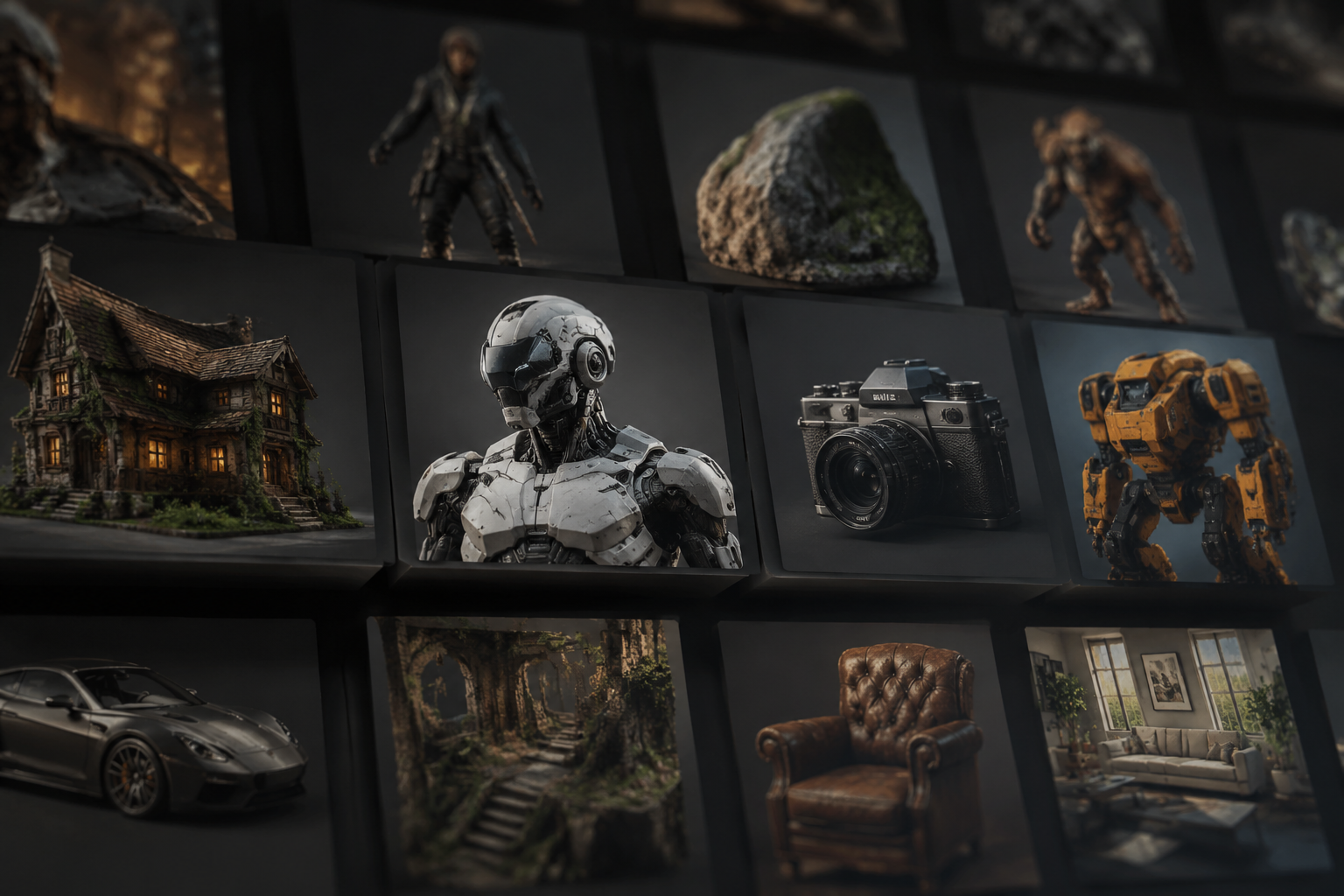
Whether you’re a freelance game designer building your first indie title, an architect visualizing a new residential development, or a 3D printing enthusiast prototyping a custom product, 3D models are the backbone of your work. The question almost every creator faces early on is: should you download a free 3D model from a public repository, or invest in a paid asset from a professional marketplace? The choice isn’t as simple as “you get what you pay for” – free models have improved dramatically in quality over the past decade, while paid models come with their own set of tradeoffs that don’t always make them the right fit for every project. We’ll break down the key differences, advantages, limitations, and use cases for both to help you make the best choice for your next project.
Core Differences: What Sets Free and Paid 3D Models Apart
Before diving into pros and cons, it’s important to understand the fundamental distinctions between free and paid 3D models beyond price. These differences touch on licensing, quality control, polycount, and the level of support you can expect as a user.
Licensing and Usage RightsOne of the biggest, and most often overlooked, differences between free and paid 3D models is licensing. Free models are distributed under a wide range of licenses, from completely public domain (no restrictions on any use, commercial or personal) to restrictive non-commercial licenses that require attribution or ban you from using the model in a product you sell. Some free model sites even host copyrighted assets (character models from popular movies, branded products, trademarked logos) that are uploaded illegally, exposing you to legal risk if you use them in a public or commercial project.
Paid 3D models, by contrast, almost always come with clear, standardized commercial usage licenses. Most marketplaces like TurboSquid, CGTrader, or Sketchfab allow you to use purchased models in commercial projects, with some limiting how many times you can redistribute the model itself (but not how you use it in a finished product). Higher-tier paid licenses often extend to unlimited redistribution, making them suitable for use in stock assets or mass-produced products. While it’s still your responsibility to check the license terms, paid marketplaces enforce stricter rules against copyrighted content, reducing your legal risk significantly.
Quality Control and ConsistencyFree 3D model repositories are almost always community-driven, meaning anyone can upload a model regardless of skill level or file quality. You might find a perfectly clean, production-ready model on the same page as a model that’s missing textures, has reversed normals, or overlapping geometry that will break when you try to 3D print it or import it into a game engine. There’s no guarantee of consistency, even from the same creator.
Paid model marketplaces typically require moderators to review every model before it goes live, checking for common errors, missing files, and quality standards. Professional 3D artists who sell their models rely on good reviews to generate future sales, so they have a strong incentive to deliver consistent, error-free work. This doesn’t mean every paid model is perfect – you’ll still occasionally run into issues – but the baseline quality is far more predictable than with free assets.
Geometry and OptimizationFor use cases like game development, 3D printing, or AR/VR applications, optimization is critical. Free models are often created as personal projects or for rendering only, so they can have unnecessarily high polycounts (the number of polygons that make up the model) that will slow down your project or cause 3D printers to struggle with excessive detail. Many free models also don’t come with retopologized versions or LODs (level of detail) that are required for real-time applications.
Paid models designed for commercial use are almost always optimized for their intended use case. A paid game-ready tree model will come with multiple LODs, a clean low-poly base mesh, and correctly packed textures to keep file sizes small. A paid 3D print model will be manifold, have correct wall thickness, and be split into printable pieces if needed, eliminating hours of rework for you.
Advantages of Free 3D Models
Free 3D models have come a long way from the messy, low-quality assets that dominated early repositories. For many creators, especially those working on personal projects or tight budgets, free models are more than sufficient to get the job done. Let’s look at the key benefits of choosing free assets.
Zero Upfront Cost for Hobbyists and Early-Stage ProjectsThe most obvious advantage of free 3D models is that they don’t cost anything, which is a game-changer for hobbyists, students, and indie creators just starting out. If you’re a 3D printing enthusiast testing a new design idea, a student working on a class project, or an indie developer building a prototype to pitch to investors, you don’t need to invest hundreds of dollars into assets when you’re still testing your concept. Free models let you experiment without financial risk, and you can always replace them with paid assets later if your project moves into commercial production.
Massive Variety and Niche AvailabilityThe largest free 3D model repositories host millions of assets, covering everything from common household items to rare historical artifacts, custom mechanical parts, and niche character designs. Because thousands of independent creators upload their work for free, you can often find obscure models that simply aren’t available for purchase anywhere. For example, if you need a 3D model of a 1970s portable record player for a retro animation project, you’re far more likely to find a fan-created free version than a polished paid one.
Many popular free repositories also let creators upload custom edits of existing models, so you can find pre-modified versions of assets that would require hours of work to adjust yourself. This is especially common in the 3D printing community, where creators share free modified models with corrected tolerances or added features that improve printability.
Flexibility for Customization and LearningFree 3D models are an excellent learning resource for new 3D artists. You can download a model, open it up in Blender or Maya, and study how a more experienced creator structured their geometry, unwrapped their UVs, and set up their textures. Because you’re not investing any money, you can experiment with editing and modifying the model without worrying about wasting your investment. For creators who want to build a custom asset starting from a base, a free model is a perfect starting point that cuts down on your work time without requiring upfront spending.
"Free 3D models lowered the barrier to entry for 3D design more than any other tool of the last decade. They let students, hobbyists, and new creators test ideas that they would never have been able to afford to build from scratch 20 years ago."
– Blender Studio Artist Alex Chafin, interviewed for 3D World Magazine
Limitations of Free 3D Models
While free 3D models have a lot of going for them, they come with significant drawbacks that can make them a poor choice for commercial or production work. Understanding these limitations will help you avoid costly mistakes down the line.
Legal and Licensing UncertaintyOne of the biggest risks of using free 3D models is unclear or non-compliant licensing. A 2022 study of 500 random free 3D models from popular public repositories found that nearly 40% had no clear license information attached at all, leaving creators unsure if they can use the model for commercial purposes. Another 25% were uploaded without the original creator’s permission, including a large number of copyrighted character and brand models. If you use one of these models in a commercial product, you could face a takedown notice, a lawsuit, or lost revenue from having to rework your project after the fact.
Even when a free model has a clear license, it can come with restrictive terms that don’t fit your project. For example, many free models are distributed under Creative Commons Non-Commercial licenses, which ban you from using them in any product you sell. If you forget to read the fine print, you could be on the hook for copyright infringement even if you didn’t mean to violate the terms.
Inconsistent Quality and Hidden Rework TimeAs we mentioned earlier, free models have no quality control, so what looks like a perfect model in the preview image can turn into hours of work when you open it in your 3D software. Common issues with free models include:
- Missing or mismatched texture files that require you to retexture the entire model from scratch
- Non-manifold geometry, reversed normals, and overlapping faces that break 3D prints or game engine imports
- Overly high polycounts that require retopology to work for real-time applications
- Incorrect scale and proportions that require extensive editing to fit your project
- No support for common file formats, forcing you to convert the model and lose quality in the process
While you don’t pay upfront for a free model, the hours you spend fixing it can end up costing you more in time and labor than if you had just purchased a clean, ready-to-use model in the first place. For professional creators working on deadline, that rework time can translate to missed deadlines and lost clients.
Lack of Support and UpdatesMost free 3D models are uploaded by creators who have no obligation to fix issues, update the model for new software versions, or answer your questions if you run into problems. If you download a free model that’s missing a texture file, or doesn’t work in the latest version of Blender, you’re on your own to fix it. For creators who don’t have a lot of 3D editing experience, this can turn a simple project into a major headache.
Advantages of Paid 3D Models
Paid 3D models range in price from a few dollars for a small asset to hundreds of dollars for a complex, production-ready asset pack. For professional and commercial projects, the benefits of paid models almost always outweigh the upfront cost.
Clear Licensing and Reduced Legal RiskWhen you purchase a 3D model from a reputable marketplace, you get a clear, written license that outlines exactly what you can and can’t do with the asset. Most standard commercial licenses let you use the model in any commercial project, from games to architectural visualizations to 3D printed products, with no attribution required (though some do require it, so always check). Reputable marketplaces also remove copyrighted or infringing content proactively, so you’re far less likely to accidentally use an illegal asset than you are with free models. For businesses and professional creators, this peace of mind alone is often worth the cost of the model.
Consistent, Production-Ready QualityPaid 3D models are created by professional artists who rely on positive reviews to stay in business, and they’re vetted by marketplace moderators before they’re listed. This means you can expect a level of quality that’s almost impossible to find consistently in the free model ecosystem. Common features of most paid production-ready models include:
- Clean, error-free geometry optimized for the intended use case (game development, 3D printing, rendering, etc.)
- All required texture files included, with correctly packed UVs and PBR (physically based rendering) maps for realistic lighting
- Multiple file formats included (FBX, OBJ, STL, BLEND, etc.) so you can import the model directly into your software of choice without conversion
- Pre-configured materials, rigs for animated characters, and LODs for real-time use, eliminating hours of setup work
For example, a paid 10-pack of architectural furniture models for a housing development visualization will be ready to drop straight into your scene, with correct scale, realistic materials, and optimized polycounts that won’t slow down your render times. A comparable set of free models would likely require hours of adjusting materials, fixing scale issues, and optimizing geometry to get the same result.
Support and Regular UpdatesMost paid 3D artists offer support for their models, so if you run into an issue (a missing file, a compatibility issue with new software, a question about editing the model), you can reach out to the creator and get help. Many creators also update their models over time to fix bugs, add new file formats, or add extra features, so you get a better product long after you purchase it. This level of support is invaluable when you’re working on a tight deadline and need a problem solved quickly.
Customization and Commission OptionsMost marketplaces that sell pre-made 3D models also let you commission custom models from professional artists if you can’t find exactly what you need. This is much faster than building a complex model from scratch, and it’s often cheaper than hiring a full-time in-house artist for a one-off project. You get a model that’s built exactly to your specifications, with all the quality and licensing benefits of a pre-made paid model.
When to Choose Free vs Paid: Practical Guidance
There’s no one-size-fits-all answer to the free vs paid question – the right choice depends on your project type, your experience level, and your budget. Below is practical guidance to help you decide:
Choose Free 3D Models If:- You’re working on a personal, non-commercial project or prototype. If you’re a hobbyist 3D printing a display piece for your home, a student working on a class project, or an indie developer testing a game concept, free models are the perfect cost-effective choice. Just make sure to check the license to confirm it allows your intended use.
- You need a base model for heavy customization. If you’re planning to completely rework a model to fit your vision, starting with a free base model cuts down your work time without requiring you to pay for a pre-made asset you’re going to change anyway.
- You need an obscure niche asset that isn’t available for purchase. For rare or one-off use cases, the community-driven nature of free repositories often means you can find a model that simply doesn’t exist in paid marketplaces.
- Your budget is extremely limited and you have the time to fix errors. If you can’t afford to buy a model and you’re comfortable troubleshooting geometry and texture issues, a free model is a perfectly acceptable choice.
- You’re working on a commercial project that will generate revenue. The reduced legal risk and time savings of paid models almost always make them worth the upfront investment for commercial work. A $20 model that saves you 5 hours of rework is a far better deal than a free model that costs you hundreds of dollars in labor.
- You need a production-ready asset that works right out of the box. If you’re on a deadline or you don’t have the experience to fix 3D model errors, a paid model will drop straight into your project and work as expected.
- You need a model for 3D printing or real-time applications. These use cases require clean, optimized geometry that free models rarely provide, so a paid model that’s already been tested for printability or real-time use eliminates a huge amount of work.
- You want to support the 3D artist community. When you purchase a model directly from an independent creator, you’re supporting their work and enabling them to create more high-quality assets for the community in the future.
It’s also worth noting that you don’t have to choose one or the other – many creators mix free and paid assets in the same project. For example, you might use free background props to fill out a scene and purchase a high-quality main character model that’s the focus of your work. This hybrid approach lets you save money on low-priority assets while investing in quality where it matters most.
Conclusion
The debate between free and paid 3D models doesn’t have to be an either/or situation. Free models are an incredible resource for hobbyists, students, and early-stage projects, lowering the barrier to entry for 3D creation and letting creators experiment without financial risk. They offer unbeatable variety for niche use cases and are perfect when you need a base for heavy customization or a non-commercial one-off project. Paid 3D models, on the other hand, deliver consistent quality, clear licensing, and production-ready optimization that save you time and reduce legal risk for commercial work, making them worth the upfront investment for professional creators.
Ultimately, the best choice comes down to understanding your project’s needs: what you’ll use the model for, whether you can afford the upfront cost, and how much time you have to fix issues with a free asset. By weighing the advantages and limitations we’ve outlined here, you can make a choice that fits your budget, your timeline, and your creative goals, whether you go with free, paid, or a mix of both.