
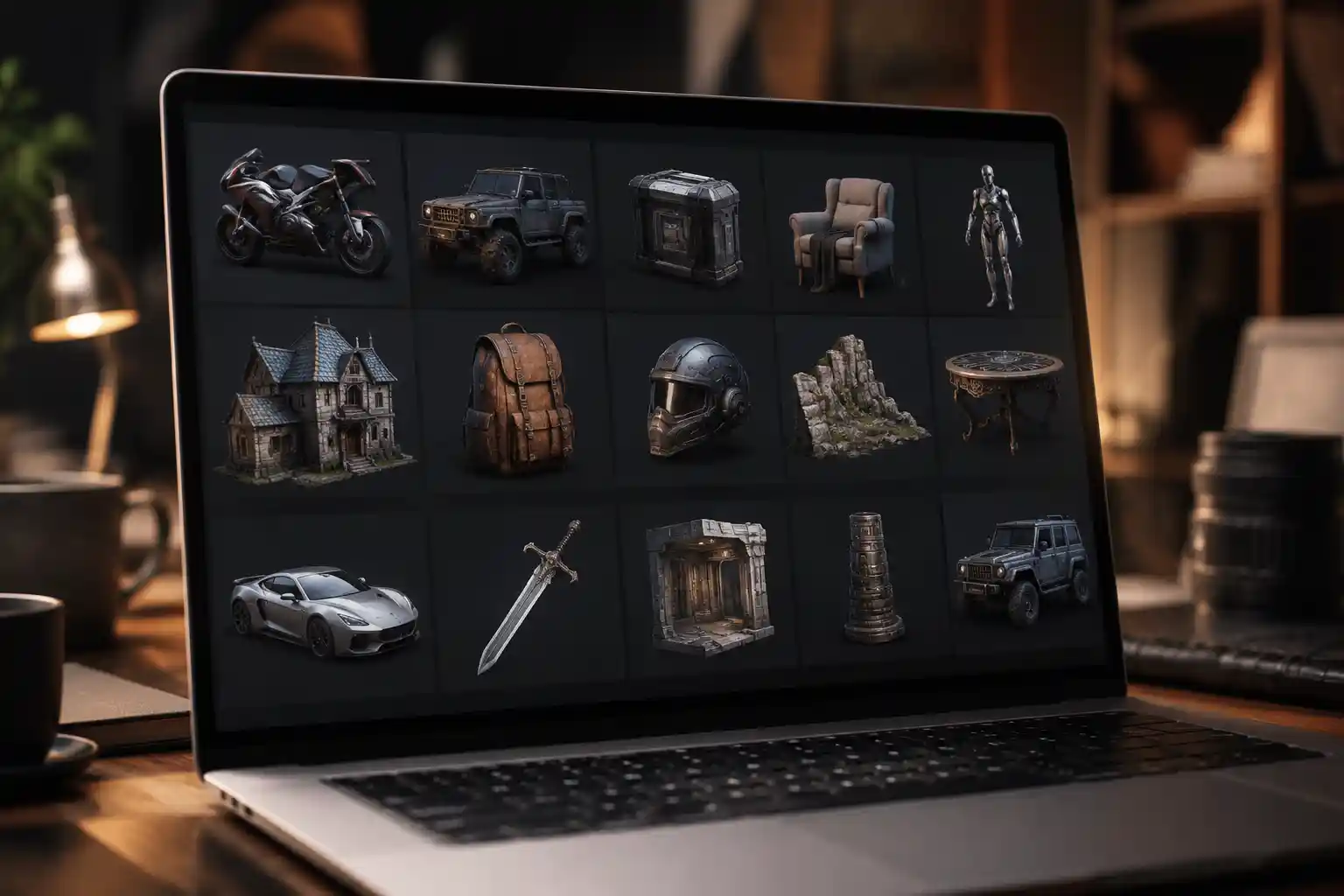
Whether you’re a game developer building an open-world landscape, a product designer prototyping a new consumer gadget, a 3D printing enthusiast crafting a custom figurine, or an architecture student visualizing a campus building, high-quality 3D models are the foundation of your project. Hunting for the right model can eat up hours of work: you might stumble across damaged files, incompatible formats, or unexpected hidden fees for a model that doesn’t match your needs. Knowing where to look, what to look for, and how to avoid common pitfalls saves you time and helps you get back to creating. This guide breaks down the best places to find 3D models for every use case, from free hobbyist projects to commercial professional work.
Free 3D Model Repositories for Hobbyists and Beginners
For new creators, students working on class projects, or hobbyists testing out 3D printing or game design, free 3D model libraries are a great starting point. They let you experiment without committing to a monthly subscription or per-model fee, and many include community-vetted files that work with common software and printers. What you gain in cost savings, though, you often trade off in licensing flexibility or model complexity, so it’s important to know which platforms prioritize quality over quantity.
Top Community-Driven Free PlatformsCommunity-run platforms rely on creators to upload their own models, resulting in huge libraries that span almost every niche you can imagine. The most popular of these is Thingiverse, run by 3D printer manufacturer MakerBot. With over 2 million free models, it’s the go-to for 3D printing projects, from phone cases to cosplay props to replacement home goods. Every model on Thingiverse is free to download and modify for personal use, and most include user comments that note common printing issues or successful adjustments. The main downside is that commercial use is rarely allowed, and model quality can vary wildly—some files are perfectly calibrated, while others need extensive work to print correctly.
Another major community platform is Sketchfab, which supports both free and paid models. What sets Sketchfab apart is its built-in 3D viewer that lets you inspect a model from every angle before downloading, so you can check for polygon errors or missing textures before you commit. The free library has millions of models, including many that are licensed for commercial use with attribution. It’s especially popular with game developers and AR/VR creators, since it supports high-poly models and common formats like FBX and glTF.
For creators looking for engineering and architectural models, OpenSCAD has a library of parametric open-source models, and GrabCAD (owned by Stratasys) hosts over 4 million free CAD models for mechanical engineering and product design. GrabCAD is ideal if you need a model of a standard component—like a bolt, bearing, or motor housing—that you can drop directly into your CAD assembly, instead of modeling it from scratch.
What to Watch For With Free ModelsNot all free models are created equal, and there are a few common pitfalls to avoid. Always check the license before you use a model in a public or commercial project. Some free licenses only allow personal use, while others require attribution to the original creator. Using an unlicensed model in a commercial game or product can lead to copyright claims down the line. It’s also important to check model polygon count: a high-poly sculpt of a character that looks great in a render might crash your game engine if you don’t optimize it first. For 3D printing, always verify that the model is manifold (has no holes in the mesh) and that the orientation is correct for printing—many community uploads skip this prep work.
Paid Marketplaces for Professional Commercial Use
When you’re working on a commercial project—whether it’s a AAA video game, a marketing campaign, or a consumer product prototype—investing in a high-quality, legally cleared 3D model is almost always worth the cost. Paid marketplaces vet most models before they go live, offer clear commercial licenses, and often include multiple formats and texture maps that work out of the box with professional software. There are marketplaces tailored to every niche, from 3D printing to visual effects to architectural visualization.
General-Purpose Paid MarketplacesThe largest and most well-known general paid marketplace is TurboSquid, which has been around since 2000 and hosts over a million 3D models. TurboSquid caters specifically to professional creators, with strict quality checks for most uploaded models and a wide range of categories: furniture, vehicles, characters, architecture, and electronics. Licenses are clear: you can choose between a standard license for most commercial uses (up to 100,000 physical reproductions or 5 million digital impressions) and an extended license for larger projects or merchandise. One of TurboSquid’s most useful features is its 3D model checkers, which verify that models are properly scaled, have no mesh errors, and include all required textures. Many models also come in multiple native formats for software like 3ds Max, Maya, Blender, and Cinema 4D, so you don’t have to spend time converting file types.
Another popular general marketplace is CGTrader, which combines a library of pre-made models with a custom commission service. If you can’t find the exact model you need, you can hire one of thousands of 3D artists on the platform to create it for you at a range of price points. CGTrader’s pre-made library is particularly strong for 3D printable models, with many designers selling optimized files that are ready to print without any extra work. Licenses are straightforward, with clear options for personal and commercial use.
Niche Paid Platforms for Specific Use CasesDepending on your project, a niche marketplace may offer better quality and more relevant models than a general platform. For example:
- Game development and AR/VR: Unity Asset Store and Unreal Engine Marketplace are the go-to sources for game-ready 3D models. Every model is optimized for its respective engine, includes compatible materials and shaders, and often comes with rigged characters and animation files. Prices range from free for starter assets to hundreds of dollars for high-quality environment packs, and licenses are cleared for commercial game releases.
- Architectural visualization: 3D Warehouse (by SketchUp) has a mix of free and paid architectural components, from window frames to furniture to entire building facades. For professionals, ArchDaily’s 3D model library and Turbosquid’s Arch-Viz collection offer physically accurate, high-resolution models that are ready for photorealistic rendering.
- 3D printing for commercial projects: MyMiniFactory has a large paid section of tested, 3D printable models from independent designers, and many designers offer commercial licenses for small-batch production. Cults3D is another popular platform for premium 3D printable models, with a strong community of designers creating cosplay, home decor, and functional parts.
Subscription models are another popular option for professional creators who need regular access to new models. Platforms like 3DExport and All3DFree (which actually has a premium subscription tier) offer unlimited downloads for a monthly or annual fee, which can save you money if you need dozens of models for a large project. Just make sure to check the license terms for subscription platforms: some limit commercial use, or require extra fees for extended use cases.
“A $10 3D model that saves you 8 hours of modeling work is the best investment a freelance creator can make. The time you get back to focus on the creative parts of your project is worth far more than the cost of the asset.”
Government and Institutional Open-Source 3D Model Collections
Most creators overlook this category, but government agencies, universities, and cultural institutions around the world have released massive collections of free, legally clear 3D models for public use. These collections are especially valuable if you’re working on historical projects, educational content, scientific visualization, or cultural heritage projects, where accuracy is critical. Most models are released under open licenses that allow free personal and commercial use, with minimal attribution requirements.
Cultural Heritage and Museum CollectionsMuseums around the world have been 3D scanning their collections for preservation and public access for decades, and many have made their full 3D model libraries available online. The most extensive is the Smithsonian 3D Collection, which includes over 4,000 3D models of artifacts ranging from dinosaur skeletons to ancient Egyptian sculptures to the Apollo 11 command module. All models are free to download, and most are released under a Creative Commons license that allows non-commercial and commercial use with attribution. The models are incredibly accurate, since they’re created from high-resolution laser scans of the original artifacts, making them perfect for educational content, documentary films, or historical game environments.
Another major cultural heritage platform is OpenHeritage3D, which hosts thousands of 3D models of archaeological sites and historic buildings from projects around the world. If you need an accurate 3D model of a Roman ruin or a medieval castle for a visualization or game, this is one of the best places to look. The British Museum also has a growing collection of 3D scanned artifacts available for free download on its website and on Sketchfab.
Scientific and Government CollectionsGovernment space agencies and research institutions have released some of the most impressive large-scale 3D models available to the public. NASA, for example, hosts a 3D Resources collection with free 3D models of planets, moons, rovers, rockets, and spacecraft. All models are cleared for public use, since NASA work is in the public domain in the United States. You can download a high-resolution 3D model of the entire Mars surface, the James Webb Space Telescope, or the Perseverance rover for free, with no copyright restrictions. This is a huge resource for science communicators, game developers working on space-themed projects, or educators creating interactive astronomy content.
The U.S. Geological Survey (USGS) also hosts 3D models of geological features, terrain, and landforms from across the United States, created from LiDAR scanning data. For architects, urban planners, or environmental researchers working on landscape projects, these models are far more accurate than generic terrain assets you can find on commercial marketplaces. Many universities also host open 3D model collections for research and education: for example, the University of California has a collection of 3D models of biological specimens, from human bones to plant samples, that are free to use for educational content.
Custom 3D Model Creation: When to Commission an Artist
Sometimes, you can’t find the exact 3D model you need in pre-made libraries. If you’re working on a custom product, a branded game character, or a specific architectural design that doesn’t exist anywhere else, commissioning a custom 3D model from a freelance artist is the best solution. There are dozens of platforms that connect you with skilled 3D artists, and you can find creators that fit every budget and project scope.
Best Platforms for Commissioning Custom 3D ModelsGeneral freelance platforms like Upwork and Fiverr have thousands of 3D artists specializing in everything from 3D printing to character modeling to CAD design. Fiverr is particularly good for small, low-budget projects: you can find artists that will create a simple 3D model for $50 to $100, though quality varies, so you should always check their portfolio before hiring. Upwork is better for larger, more complex projects, where you can hire a full-time freelance artist for several weeks or months, and set milestones to track progress.
As mentioned earlier, CGTrader has a built-in commission service that lets you post a project description and receive bids from multiple artists, with built-in payment protection to make sure you get the final file you agreed on. For 3D printing-specific commissions, platforms like 3D Hubs (now called Hubs) can connect you with designers who can create a 3D model optimized for your specific printer and material. If you need a CAD model for manufacturing or product design, platforms like Tindie and CAD Crowd specialize in connecting product designers with experienced CAD modelers who understand engineering requirements and manufacturing tolerances.
Tips for a Successful CommissionWorking with a freelance 3D artist requires clear communication to get the result you want. Follow these practical tips to avoid miscommunication and delays:
- Create a detailed brief that includes exactly what you need: specify the intended use (3D printing, game engine, render), required file format, polygon count or resolution, reference images, and any specific dimensions or features the model must have.
- Ask to see the artist’s portfolio before hiring. Make sure they have experience creating the type of model you need—an artist that specializes in high-poly character sculpts won’t necessarily be good at creating engineering CAD models for manufacturing.
- Agree on milestones and revision terms upfront. Most artists include 2-3 rounds of revisions in their price, but additional changes will cost extra, so make sure you both agree on this before starting work.
- Get a clear commercial license in writing. For commercial projects, make sure you have full ownership of the final model, or a clear license that allows you to use it for your intended purpose.
For small businesses and independent creators, commissioning a custom model is often more affordable than it sounds. A simple low-poly model for a game might cost $100-$300, while a complex rigged character can cost $1,000-$3,000, which is still less than the cost of hiring a full-time in-house artist for the project.
How to Choose the Right Source for Your 3D Model
With so many options available, how do you pick the right source for your specific project? The answer depends on three key factors: your intended use, your budget, and the level of quality and accuracy you need. Let’s break down how to decide:
If you’re a hobbyist working on a personal 3D printing project or a student working on a class assignment, start with free community repositories like Thingiverse or Sketchfab. You’ll almost certainly find what you need for free, and you can experiment without any financial risk. Just double-check the license to make sure you’re not violating any copyright terms if you plan to share your project publicly.
If you’re a professional working on a commercial project and you need a standard pre-made model, a paid marketplace like TurboSquid or the Unreal Engine Marketplace is your best bet. The upfront cost is offset by the time you save not having to model from scratch, and you get a legally cleared, high-quality model that works out of the box. For creators who need multiple models a month, a subscription service can offer significant savings compared to buying individual models.
If you need a historically or scientifically accurate model for a public project, don’t forget to check government and institutional collections first. You can get a high-quality, accurate model for free, with clear public use rights that eliminate any copyright risk.
If you can’t find the exact model you need anywhere, or you need a custom model tailored to your specific requirements, commissioning a freelance artist is the way to go. Even for small projects, the cost is often worth it to get exactly what you need instead of settling for a pre-made model that doesn’t fit your vision.
One final tip: always preview and test a model before you use it in a final project. For 3D models, this means checking for mesh errors, missing textures, incorrect scaling, and incompatible file formats. Most good platforms let you preview the model before you download it, but it’s always a good idea to import it into your software and check for issues before you start working.
Conclusion
Finding the right 3D model doesn’t have to be a frustrating process of sifting through low-quality files and hidden fees. Whether you’re a beginner hobbyist testing out 3D printing, a professional game developer building a new world, or a researcher creating a scientific visualization, there’s a source that fits your needs and budget. Free community repositories are perfect for personal projects, paid marketplaces offer reliable, legally cleared models for commercial work, open institutional collections give you free access to accurate cultural and scientific assets, and freelance commissions let you get a custom model built exactly to your specifications. By matching your project to the right source, you can spend less time searching and more time creating.