
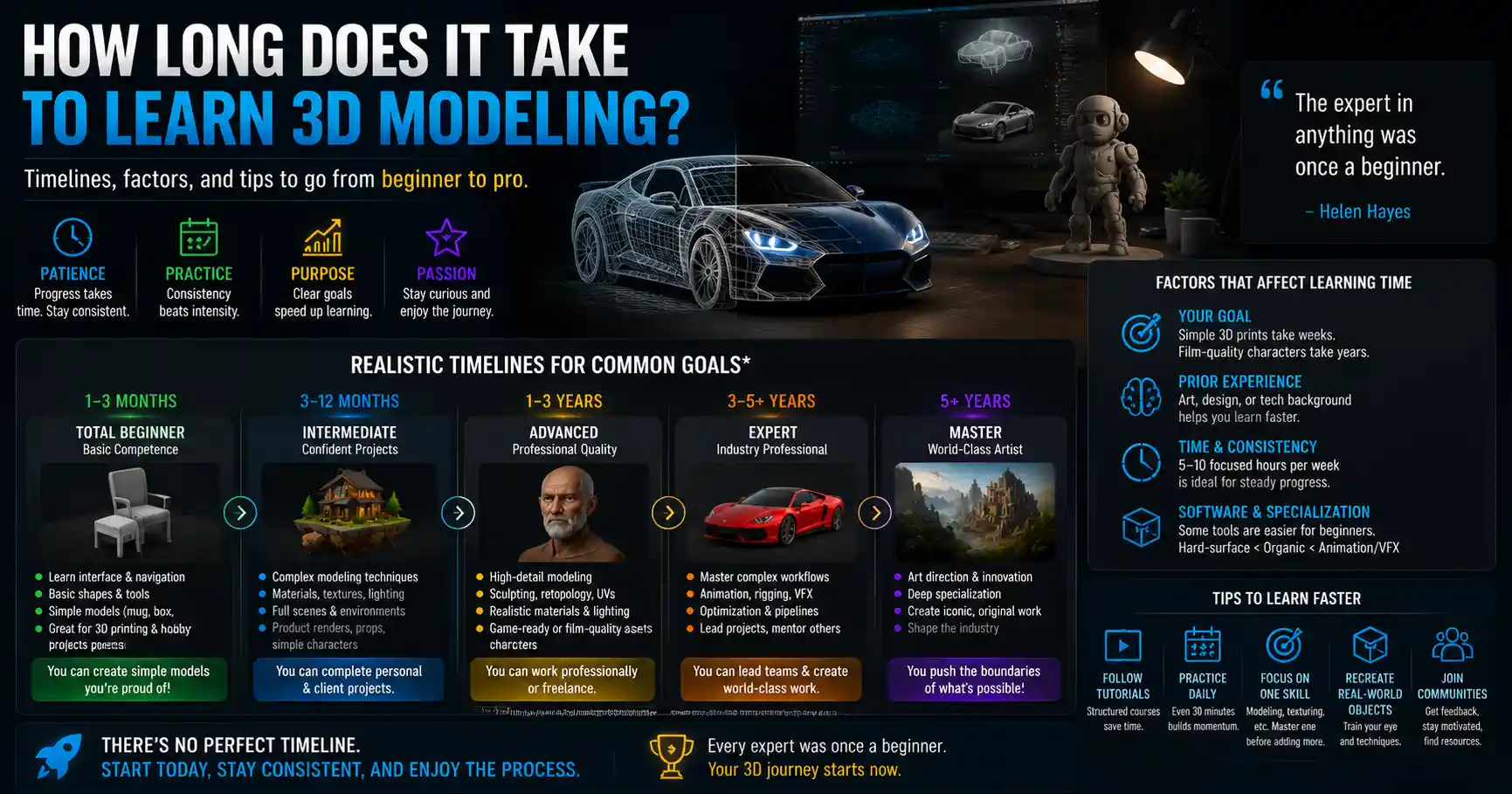
Whether you’re a digital artist considering a career shift, a recent design graduate exploring creative tech roles, or a seasoned 3D modeler looking to negotiate a raise, understanding the landscape of 3D modeling salaries is key to making smart professional decisions. 3D modeling has grown far beyond its early roots in Hollywood special effects, now powering everything from video game open worlds and medical device design to architectural visualizations and 3D-printed consumer products. As demand for skilled 3D artists continues to rise across multiple industries, salary ranges vary dramatically based on experience, specialization, location, and employment type. This guide breaks down all the factors that impact 3D modeling pay, helping you set realistic expectations and position yourself for the compensation you deserve.
Average 3D Modeling Salaries by Experience Level
As with most creative and technical careers, 3D modeling salaries increase steadily with experience, as artists build technical proficiency, a portfolio of high-quality work, and industry connections. Entry-level, mid-career, and senior roles come with very different pay expectations, regardless of the industry you work in.
Entry-Level 3D Modeling (0-3 Years Experience)
Entry-level 3D modelers typically take on junior roles, working under the guidance of senior artists to complete basic modeling tasks, texture assets, or adjust existing designs. Most entry-level candidates hold a bachelor’s degree in graphic design, fine art, computer graphics, or a related field, though many self-taught artists break into the industry by building a strong public portfolio. In the United States, entry-level 3D modeling salaries average between $45,000 and $65,000 per year, according to 2024 data from Glassdoor and PayScale. In the United Kingdom, the same entry-level roles average £25,000 to £35,000, while in Canada, entry-level pay ranges from CAD 40,000 to CAD 58,000 per year. Entry-level freelancers typically earn less early on, often between $20 and $40 per hour, as they build a client base and reputation.
Mid-Career 3D Modeling (3-10 Years Experience)
After three to five years of consistent professional experience, most 3D modelers advance to mid-level roles, where they take on more complex projects, manage small workflows, and may even lead junior team members. At this stage, artists often specialize in a specific industry or type of modeling, which can boost earning potential. In the U.S., mid-career 3D modeling salaries average $70,000 to $100,000 annually. UK mid-level 3D modelers earn an average of £38,000 to £55,000, while Australian mid-career pay ranges from AUD 70,000 to AUD 95,000. Mid-career freelancers can expect to earn $50 to $100 per hour, depending on their specialization and client base, with many matching or exceeding full-time salaries by taking on multiple steady projects.
Senior-Level 3D Modeling (10+ Years Experience)
Senior 3D modelers, lead artists, and 3D art directors with 10 or more years of experience command the highest salaries in the field, often owning entire project pipelines or overseeing large teams of artists. Many senior roles also require soft skills like project management, client communication, and workflow design, which add to their value. In the U.S., senior 3D modeling salaries range from $100,000 to $160,000 per year, with top roles at major studios or tech companies exceeding $200,000 when including bonuses and equity. In the UK, senior 3D modelers earn an average of £60,000 to £90,000, while Canadian senior pay ranges from CAD 95,000 to CAD 140,000. Experienced senior freelancers can charge $100 to $200+ per hour for specialized work, with large commercial projects earning them six figures annually even when working independently.
How Industry Specialization Impacts 3D Modeling Pay
One of the biggest factors impacting a 3D modeler’s salary is the industry they choose to work in. 3D modeling skills are transferable across dozens of sectors, but some industries prioritize specialized expertise and are willing to pay a premium for top talent. Below are the most common 3D modeling specializations and their corresponding salary ranges (based on U.S. mid-career averages):
- Video Game 3D Modeling: The video game industry is one of the largest employers of 3D modelers, who create everything from character models and environmental assets to weapon designs and full open-world landscapes. Mid-career game 3D modelers earn an average of $75,000 to $105,000 per year, with major studios like Activision Blizzard, Riot Games, and Naughty Dog paying top mid-level artists upwards of $120,000. Senior lead modelers at AAA studios can earn $150,000 to $200,000 with performance bonuses.
- Film and VFX 3D Modeling: 3D modelers working in feature film, television, and visual effects create everything from animated characters to digital set extensions and creature designs. Mid-career VFX modelers earn an average of $80,000 to $110,000 annually, with top roles at studios like Industrial Light & Magic, Wētā FX, and Pixar exceeding $130,000. The high-pressure, fast-turnaround nature of VFX work often comes with overtime pay or project bonuses that boost total compensation.
- Architectural Visualization (ArchViz) 3D Modeling: ArchViz 3D modelers create realistic renderings of buildings, interiors, and outdoor spaces for real estate developers, architecture firms, and construction companies. Mid-career ArchViz modelers earn an average of $68,000 to $95,000 per year, with independent freelancers serving high-end commercial clients often earning more than in-house full-time artists.
- Product Design and Manufacturing 3D Modeling: 3D modelers in industrial and product design create precise, production-ready models for everything from consumer electronics and furniture to medical devices and automotive parts. This field often requires knowledge of CAD (computer-aided design) software in addition to traditional 3D modeling skills, and the specialized technical knowledge commands higher average pay: mid-career product design 3D modelers earn $85,000 to $115,000 per year, with senior roles in aerospace and medical manufacturing exceeding $150,000 annually.
- Advertising and Marketing 3D Modeling: Brands and advertising agencies increasingly use 3D modeling to create product visuals, animated ads, and immersive marketing experiences. Mid-career 3D modelers in advertising earn an average of $70,000 to $100,000, with top roles at major global agencies paying more for artists who can deliver fast, high-quality work for big brand campaigns.
Emerging specializations like augmented reality (AR), virtual reality (VR), and 3D printing are also creating new high-paying opportunities for 3D modelers. As brands invest more in immersive digital experiences and on-demand manufacturing, demand for artists who can create optimized 3D assets for these use cases is growing, with many roles matching or exceeding the pay of traditional 3D modeling sectors.
How Location Affects 3D Modeling Salaries
Location is another major factor that impacts 3D modeling pay, both in terms of regional cost of living and demand for local talent. Even before the rise of remote work, 3D modeling salaries varied dramatically between major tech and entertainment hubs and smaller, rural areas. Today, hybrid and fully remote roles have narrowed the gap somewhat, but location still plays a key role in compensation.
3D Modeling Salaries by Country (2024 Averages for Mid-Career Modelers)
For full-time in-house roles, average 3D modeling salaries vary significantly across major English-speaking countries:
- United States: $70,000 – $100,000 per year
- United Kingdom: £38,000 – £55,000 per year
- Canada: CAD 65,000 – CAD 95,000 per year
- Australia: AUD 70,000 – AUD 95,000 per year
Within each country, major industry hubs tend to pay higher salaries to reflect higher cost of living. In the U.S., for example, 3D modelers in Los Angeles (home to major film and game studios), San Francisco (tech and gaming), and New York (advertising and architecture) earn 15-25% more than the national average. A mid-career 3D modeler in San Francisco can expect to earn $90,000 to $125,000 per year, compared to $60,000 to $85,000 for the same role in a smaller Midwestern city. In the UK, 3D modelers in London earn an average of 20-30% more than modelers based in smaller cities outside the southeast.
Remote Work and Salary Adjustments
The rise of fully remote 3D modeling roles has changed the salary landscape significantly over the past five years. Many U.S. companies now hire 3D modelers from other countries or lower-cost of living regions, and while they often adjust salaries to reflect local costs, remote 3D modelers still typically earn more than they would at a local in-house role in lower-cost regions. For example, a 3D modeler based in Eastern Europe working remotely for a U.S. game studio can earn two to three times more than they would at a local studio, even after the company adjusts for location. On the flip side, some 3D modelers based in high-cost hubs now work remotely for smaller companies in lower-cost regions, accepting a slight pay cut in exchange for more flexibility and lower living costs if they relocate outside major cities.
Full-Time vs. Freelance 3D Modeling: Which Pays More?
One of the biggest decisions 3D modelers make early in their careers is whether to pursue full-time in-house employment or build a freelance career. Both paths offer unique advantages and earning potential, and the right choice depends on your risk tolerance, work style, and financial goals.
“As a 3D modeler, freelancing gives you the chance to earn more per project than a full-time role if you’re willing to put in the work to find and retain clients, but full-time work comes with stability and benefits that can add tens of thousands of dollars to your total compensation.”
Full-time 3D modeling roles come with a consistent base salary, and most employers offer benefits packages that significantly increase total compensation. Common benefits for full-time 3D modelers include health insurance, paid time off, 401(k) or pension matching, professional development stipends, and performance bonuses. For entry-level and early mid-career modelers, these benefits can add 20-30% to the value of your salary. For example, a $70,000 per year full-time role with benefits is actually worth roughly $84,000 to $91,000 when you account for health insurance premiums, retirement matching, and paid time off that freelance modelers have to cover themselves. Full-time roles also offer consistent skill development opportunities, as you work alongside more experienced artists on large-scale projects that you might not get to lead as an early-career freelancer.
Freelance 3D modeling offers higher upside for experienced, business-savvy modelers, but it comes with more risk and inconsistent income. Entry-level freelancers typically earn less than their full-time peers early on, as they build a portfolio and client base, but experienced freelancers with a roster of repeat clients often earn 20-50% more per year than full-time modelers with the same level of experience. The biggest advantages of freelancing include the ability to set your own rates, choose your projects, and work with multiple clients to diversify your income. The biggest downsides include inconsistent cash flow, having to cover your own health insurance and retirement savings, and spending 10-20% of your time on administrative tasks like invoicing, marketing, and contract negotiation instead of billable modeling work.
Many 3D modelers find a middle ground by working full-time while taking on small freelance projects on the side, building their client base and portfolio before transitioning to full-time freelance work. This approach lets you test the waters of freelancing without giving up the stability of a full-time paycheck, and many modelers keep a mix of full-time work and side projects indefinitely to boost their total income.
5 Actionable Tips to Increase Your 3D Modeling Salary
No matter your current experience level or specialization, there are concrete steps you can take to boost your earning potential as a 3D modeler. The following tips are based on input from hiring managers and successful 3D artists across industries:
- Develop a specialized skill set that’s in high demand. Generalist 3D modelers are common, but modelers with specialized expertise command higher pay. For example, learning CAD modeling for product design, hard-surface modeling for automotive games, or photorealistic texturing for ArchViz can make you far more valuable to employers than a generalist with the same years of experience. Look for gaps in demand in your target industry and prioritize building skills that few other artists offer.
- Build a public, targeted portfolio that highlights your best work. Your portfolio is the most important tool you have for negotiating higher pay, whether you’re applying for a new full-time role or pitching freelance clients. Focus on quality over quantity: include 8-12 of your best projects that match the type of work you want to do, and host your portfolio on a personal website or a platform like ArtStation that’s popular with industry professionals. Update your portfolio every 6-12 months with new work to reflect your growing skills.
- Network actively with other professionals in your industry. Most high-paying 3D modeling roles, both full-time and freelance, are filled through word-of-mouth referrals, not public job boards. Attend industry conferences, join online communities for 3D artists in your specialization, and connect with other artists and hiring managers on LinkedIn or ArtStation. Even small interactions like sharing feedback on other artists’ work can help you build relationships that lead to higher-paying opportunities down the line.
- Negotiate your rate or salary every time you take on a new opportunity. Many 3D modelers, especially early in their careers, leave money on the table by accepting the first offer they receive. Research market rates for your experience level, specialization, and location before you go into negotiations, and don’t be afraid to ask for 5-10% more than the initial offer. For freelancers, raise your rates every 12-18 months as you gain more experience and improve your skills, even if that means turning down lower-paying work to make room for higher-paying clients.
- Consider switching roles or employers every 3-5 years to maximize growth. Staying at the same company for 10+ years often leads to slower salary growth than changing roles every few years. Most employers give annual raises of 3-5% for existing employees, but changing roles can lead to a 15-30% pay increase, especially if you’re moving from a smaller company to a larger one or switching to a higher-paying specialization. Even if you’re happy in your current role, periodically checking the job market can help you understand your market value and give you leverage to negotiate a raise with your current employer.
It’s also important to invest in continuing education to keep your skills up to date. The 3D modeling industry changes quickly, with new software, tools, and workflows emerging every year. Taking courses on new tools like Blender, ZBrush, or Substance Painter, or learning new skills like real-time 3D modeling for Unreal Engine can open up new high-paying opportunities that didn’t exist even five years ago.
Conclusion
3D modeling is a dynamic, growing career that offers a wide range of earning potential for artists with the right skills and mindset. Salaries range from entry-level $45,000 per year in the U.S. to over $160,000 per year for senior and specialized roles, with freelance modelers able to earn even more with the right client base. By choosing an in-demand specialization, building a strong portfolio, networking effectively, and proactively negotiating your pay, you can position yourself to earn a competitive salary that grows with your experience. Whether you choose the stability of full-time employment or the upside of freelancing, the demand for skilled 3D modelers continues to grow across industries, making it an excellent time to build or advance your career in this creative and rewarding field.